Herb Profile
Lion's Mane
Hericium erinaceus
May support certain cognitive task outcomes in small human studies; evidence is early, mixed, and preparation specific.
Last reviewed: •18 sources citedReport a correctionProfile-wide ·C Limited
Use extra caution — Generally food like but not risk free; reported supplement side effects include stomach discomfort, headache, allergic reactions, and occasional withdrawals in small clinical studies. Details
- Evidence
- Limited Evidence
- Typical onset
- Varies by prep
- Safety rating
- High caution
- Best for
- Cognitive
- Avoid / review if
- Avoid/Caution Mushroom Allergy, Clinician Review For Pregnancy/Breastfeeding, Immunocompromised Status
Verdict: Lion's ManeMaybe
Bottom line
Lion’s mane is the most interesting food-grade nootropic mushroom, with small human trials hinting at cognition and mood benefits — but it works slowly and the evidence is still early.
- Evidence confidence
- Limited–moderate — small human trials, mostly preclinical mechanism
- Expected onset
- Weeks
- Give it
- 8–12 weeks
Safety: Generally well tolerated; avoid if you have a mushroom allergy.
On the evidence: A few small human trials for cognition and mood; much of the mechanism work is preclinical.
Best for
- Long-term cognitive support
- A non-stimulant nootropic
- Mood and nerve-health interest
Not ideal for
- Same-day focus or alertness
- Anyone wanting fast, strong effects
- Mushroom allergy
Consider instead: Caffeine + L-theanine — for same-day focus
How strong is the evidence?Limited–moderate
Why not higher
- Human trials are small and short
- Much of the exciting nerve-growth work is preclinical
Why not lower
- A few randomized human trials show mild cognitive and mood benefits
- A plausible mechanism and a benign, food-grade safety profile
Practical takeaway: Worth a patient 8–12 week trial for long-term cognitive support. Do not expect a same-day lift — pair with caffeine/L-theanine for that.
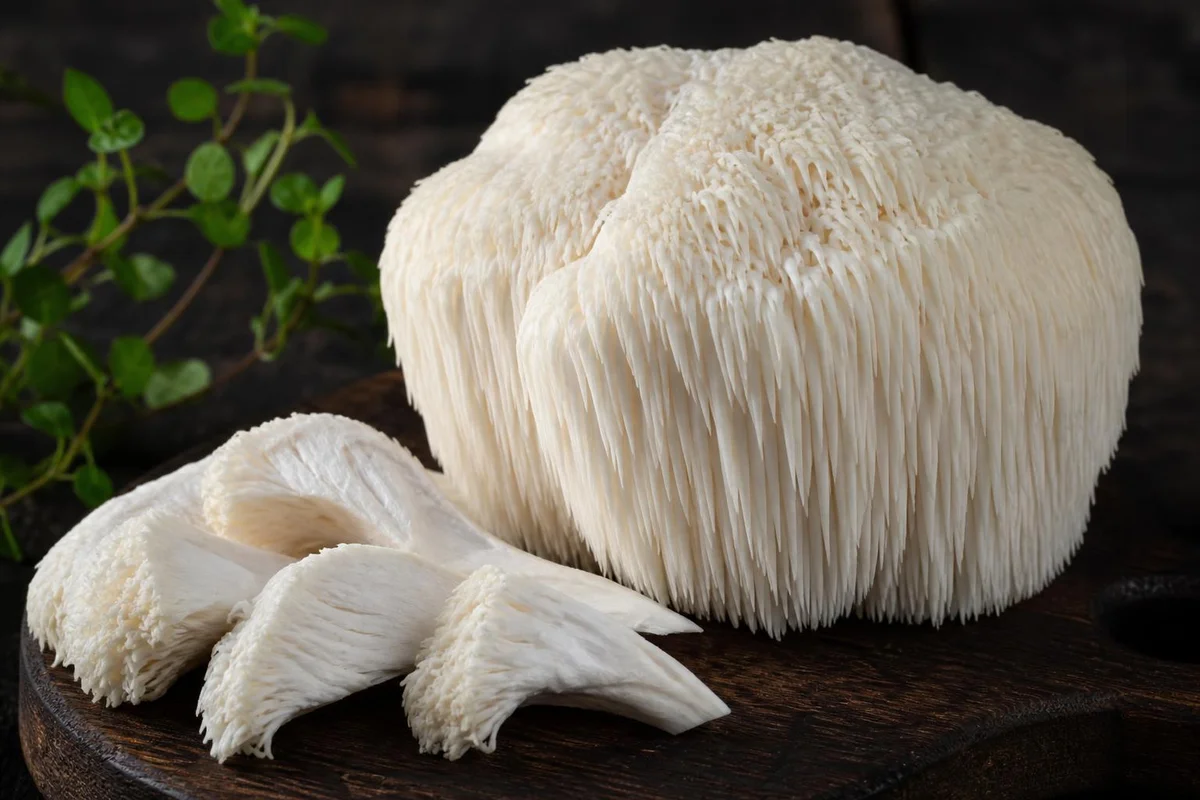
Expanded editorial review
What this profile is built to answer
Informational to commercial: evaluate lion’s mane for cognition and neurotrophic interest while choosing between fruiting body, mycelium, and dual extracts.
- Keep human cognition and mood data separate from NGF mechanism claims.
- Treat hericenones and erinacines as plausible constituents, not proof of a clinical effect.
- Rank products by disclosed mushroom part, beta-glucan testing, and contaminant controls.
| Use case | Evidence | Best fit | Typical range | Safety context |
|---|---|---|---|---|
| Cognition in older adults | Preliminary | Longer-term cognitive-support interest | Often 1-3 g/day powder equivalent or extract, trial-dependent | Not proven for dementia treatment or ADHD. |
| Mood and stress | Preliminary | Mild mood/stress overlap | Study-specific preparations over weeks | Do not replace mental-health care. |
| NGF / neurotrophic pathways | Mechanistic | Biological plausibility | No clinical dose can be derived from cell/animal data | Mechanism does not equal outcome. |
| Focus/nootropic use | Limited | Low-stimulation experiments | Use label-standardized extract; evaluate over 4-8 weeks | Expect subtle effects, not acute stimulation. |
Product and form choices
- Fruiting body extract
- Best defaultUsually clearer beta-glucan and mushroom-part labeling.
- Mycelium on grain
- Use cautionCan be starch-heavy unless actives and beta-glucans are disclosed.
- Dual extract
- Reasonable premium optionMay capture water- and alcohol-soluble fractions, but still needs testing data.
Safety checks
- Avoid if you have a mushroom allergy or have reacted to fungal products.
- Use clinician guidance with immunosuppressants or complex immune conditions.
- Treat cognition claims as experimental; worsening mood, sleep, or GI symptoms means stop and reassess.
How to choose a product
- Prefer labels that clearly say fruiting body or disclose mycelium substrate.
- Look for beta-glucan testing instead of only polysaccharide claims.
- Choose third-party contaminant testing for heavy metals and microbes.
- Avoid products promising immediate focus or disease treatment.
Safety
Safety & Cautions
Generally food like but not risk free; reported supplement side effects include stomach discomfort, headache, allergic reactions, and occasional withdrawals in small clinical studies. Long term safety is not well established.
High caution
Caution level: High. Multiple caution categories apply, or the record uses avoid/contraindication language.
- Anticoagulant CautionBleeding or anticoagulant-adjacent caution language is present.
- Pregnancy/Breastfeeding CautionPregnancy or breastfeeding caution language is present.
Detailed safety fields
Pregnancy, breastfeeding, and contraindications
- Avoid/Caution Mushroom Allergy
- Clinician Review For Pregnancy/Breastfeeding
- Immunocompromised Status
- Cancer Treatment
- Anticoagulant/Antiplatelet Use
- Or Multi Ingredient Mushroom Blends Until Better Safety Extraction Is Completed.
Safety classifications
- Anticoagulant Caution: Bleeding or anticoagulant-adjacent caution language is present.
- Pregnancy/Breastfeeding Caution: Pregnancy or breastfeeding caution language is present.
Full safety note
- Generally food like but not risk free; reported supplement side effects include stomach discomfort, headache, allergic reactions, and occasional withdrawals in small clinical studies. Long term safety is not well established.
Safety labels
- Anticoagulant Caution
- Pregnancy/Breastfeeding Caution
Evidence-based safety
Caution when combined
Severity and certainty are shown separately. A high-priority caution can still be theoretical: these pairings are screened from shared contraindication mechanisms and are not automatically documented clinical interactions. Provenance identifies the source fields that produced each flag; it does not upgrade the certainty of the pairwise claim.
High-Priority Caution
147 flagged pairingsBleeding / anticoagulant risk
High-Priority Caution
147 flagged pairingsBleeding / anticoagulant risk
Representative pairings are shown below. Large mechanism groups are intentionally summarized to keep profiles focused and crawl-efficient.
Bleeding / anticoagulant riskCertainty: Theoretical
Data provenance recorded for 147 of 147 pairings in this mechanism group.
- aescin — Theoretical interaction certainty
- Aged Garlic Extract — Theoretical interaction certainty
- ajoene — Theoretical interaction certainty
- Ajwain — Theoretical interaction certainty
- Allicin — Theoretical interaction certainty
- Garlic — Theoretical interaction certainty
- American Ginseng Extract — Theoretical interaction certainty
- Andrographis — Theoretical interaction certainty
- Angelica Archangelica — Theoretical interaction certainty
- Angelica Dahurica — Theoretical interaction certainty
- Angelica Pubescens — Theoretical interaction certainty
- Angelica Root — Theoretical interaction certainty
+135 more pairings share this mechanism. Use the Safety Checker to review a specific combination.
Evidence
Evidence Summary
Evidence lens
Read as directional context, not settled clinical proof.
LimitedLimited Evidence
Human clinical evidence: Present in source signals
Mechanistic / preclinical: Mechanism mapped — Neuroprotective Activity
Research maturity: Emerging research — Long Term Human Evidence May Be Limited.
Safety boundary: Safety note available — Generally food like but not risk free; reported supplement side effects include stomach discomfort, headache, allergic reactions, and occasional withdrawals in small clinical studies.
This profile cites 18 human studies.
Study design details
Evidence Grade
Grade C: Limited Evidence
Evaluation of methodological rigor, population reach, and evidence alignment.
- Design Match
- Systematic review
- Risk of Bias
- Low
- Consistency
- Consistent
Strongest recorded design is a systematic review, drawn from 13 recorded studies, 9 in people. No disagreement is recorded across them.
How evidence grades work
Each grade reflects the strength and consistency of published human evidence — not marketing claims. Grades are based on study count, design quality, effect size, consistency, and recency.
- Strong
- Multiple RCTs, consistent direction, adequate effect size
- Moderate
- Some RCTs or consistent observational data in humans
- Preliminary / Mixed
- Animal or in-vitro only, or conflicting human data
- Traditional / Theoretical
- Traditional use only; no controlled human trials
Clinical Study Summaries (11)4 human evidence sources · 3 human trials · Participant totals not consistently reported · Consistency not yet classifiable
Filter by study class
Showing 11 of 11 studies.
What the evidence actually shows
This table contains 11 structured sources, including 4 human evidence sources; 3 are human trials.
| Study | Design | N | Dose | Duration | Population | Outcome | Result & magnitude | Source |
|---|---|---|---|---|---|---|---|---|
Benefits, side effects, and uses of Hericium erinaceus as a supplement: a systematic review Background | Systematic review Uses a predefined method to find and evaluate relevant studies, but may or may not pool their results statistically. | — | — | — | — | — | A 2025 systematic review found a small and heterogeneous human literature (including RCTs and pilot studies) on cognition/mood, with differing products and outcomes. The review supports 'promising but not established' wording and stronger form-specific tagging. | PubMed → |
Improvement of cognitive functions by oral intake of Hericium erinaceus Saitsu et al. · Biomedical Research · 2019 Background | Randomized controlled trial Randomly assigns participants to interventions or controls, reducing many sources of bias when the trial is conducted well. | — | — | — | — | — | — | PubMed → |
Use of Hericium erinaceus as a potential therapeutic of mental disorders Cortonesi et al. · Debates em Psiquiatria · 2023 Background | Randomized controlled trial Randomly assigns participants to interventions or controls, reducing many sources of bias when the trial is conducted well. | — | — | — | — | — | — | Source → |
Acute and Chronic Effects of Lion's Mane Mushroom Supplementation Docherty et al. · Nutrients · 2023 Background | Randomized controlled trial Randomly assigns participants to interventions or controls, reducing many sources of bias when the trial is conducted well. | — | — | — | — | — | — | Source → |
Neurotrophic and Neuroprotective Effects of Hericium erinaceus Szućko-Kociuba I et al. · Int J Mol Sci · 2023 Background | Narrative review Summarizes selected literature without the full prespecified search and selection methods of a systematic review. | — | — | — | — | — | — | PubMed → |
Contato AG et al. · Nutrients · 2025 Background | Narrative review Summarizes selected literature without the full prespecified search and selection methods of a systematic review. | — | — | — | — | — | — | PubMed → |
Show 5 more studies
PubMed indexed authors · 2012 Background | Narrative review Summarizes selected literature without the full prespecified search and selection methods of a systematic review. | — | — | — | — | — | — | PubMed → |
Acute effects of Guayusa tea and Nordic Lion’s Mane extracts La Monica et al. · Nutrients · 2023 Background | Other / unclear The study design is not yet classified clearly enough to infer its place in the evidence hierarchy. | — | — | — | — | — | — | Source → |
Acute effects of Hericium erinaceus extract on cognition and mood Surendran et al. · Frontiers in Nutrition · 2025 Background | Other / unclear The study design is not yet classified clearly enough to infer its place in the evidence hierarchy. | — | — | — | — | — | — | Source → |
Benefits, side effects, and uses of Hericium erinaceus as a supplement Menon et al. · Frontiers in Nutrition · 2025 Background | Other / unclear The study design is not yet classified clearly enough to infer its place in the evidence hierarchy. | — | — | — | — | — | — | Source → |
Neuroprotective and Cognitive Benefits of Hericium erinaceus Komoń et al. · Biuletyn Głównej Biblioteki Lekarskiej · 2024 Background | Other / unclear The study design is not yet classified clearly enough to infer its place in the evidence hierarchy. | — | — | — | — | — | — | Source → |
Dosing & Timing
- Dose guidance
- Human studies vary: 1 g Nordic grown extract acutely, 1.8 g/day for 28 days, and 3 g of 10:1 fruiting body extract acutely. Older cognitive impairment trials need separate extraction before use. | Fruiting body extract; Nordic grown extract; 10:1 fruiting body extract. Mycelium/erinacine claims should be separate from fruiting body human evidence. | Do not merge fruiting body, mycelium, erinacine enriched products, culinary mushroom, and 10:1 extract as equivalent.
How Lion's Mane works
Simplified mechanism pathway based on preclinical and pharmacological evidence. Does not confirm clinical efficacy.
Mechanism Pathway — How Lion's Mane Works
CompoundTarget / ReceptorMechanismEffect / Outcome
Mechanisms & biological pathways (preclinical)
- Neuroprotective Activity
Active Compounds
Key constituents studied in Lion's Mane, with full pharmacology and safety profiles.
Compare related active botanicals
Explore botanicals with similar chemistry, effects, or safety considerations in the Botanical Activity Atlas.
Compare & Sourcing
Compare side-by-side tradeoffs or verify active marker guidelines.
Sourcing options
Lion's Mane product picks
Recommendation status
Product recommendations are not shown for this profile because the current site safety and monetization policy does not permit them.
Product form & quality guidelines
When sourcing Lion's Mane, verify the label for:
- Standardized extract: Confirm active content percentages on the supplement facts panel (e.g. standardized to specific marker compounds) rather than simple raw herb weights.
- Third-party testing: Look for independent purity labels (USP, NSF, ConsumerLab, or Eurofins) to ensure the product is free from heavy metals, solvents, and contaminants.
- Form bioavailability: Ensure the form matches evidence-supported configurations (e.g. standardized active extracts like bacosides, withanolides, or curcuminoids) for optimal onset and digestion tolerance.
Safety first · Harm reduction
This information is educational and not medical advice. Start low, avoid risky combinations, and consult a licensed clinician before making health decisions—especially if you use medications, have diagnosed conditions, or are pregnant/breastfeeding.
Learn how we evaluate confidence, safety, and intensity on the methodology page.
Founder & Head Researcher · Oak Ridge, TN · Last reviewed August 2026
Editorial Review
Checked against primary sources, cited evidence, and contraindication language before publication. Evidence claims, safety language, and affiliate modules are reviewed independently. Not personal medical advice.
Help improve this profile
Was this useful for your research?
These controls record only the page and the structured choice you make when analytics consent is enabled. Please don’t include personal medical information in research requests.
Was this evidence summary clear?
Did you find what you were researching?
Free safety checklist
Get the Lion's Mane research notes
Evidence summaries, dosing context, and safety updates for this herb — straight to your inbox.
We use your email to send the checklist and occasional evidence-first supplement updates. Unsubscribe anytime. Privacy policy.