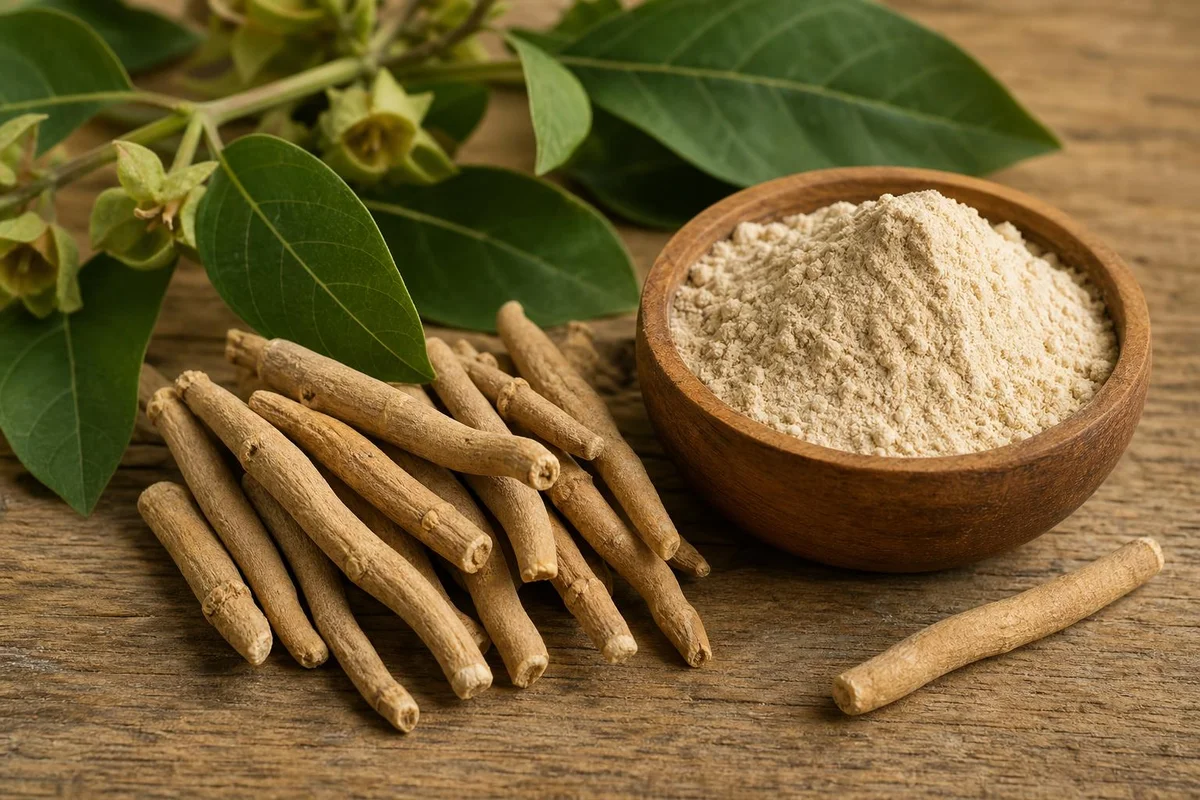
Herb Profile

Ashwagandha Withania Somnifera

Withania somnifera

Ashwagandha (Withania somnifera) is a root extract studied mainly for persistent stress, stress related anxiety, and sleep rather than immediate relief.

Last reviewed: 13 sources citedReport a correctionProfile-wide ·A Strong

Use extra caution GI upset, rare thyroid stimulation Details

Evidence
Strong Evidence
Typical onset
Varies by prep
Safety rating
High caution
Best for
Sleep, Stress, Cognitive function, Inflammatory signaling
Avoid / review if
Hyperthyroidism, Sedatives
Ashwagandha Withania Somnifera monograph visual
The Hippie Scientist illustration
Verdict: Ashwagandha Withania SomniferaYes

Best for

  • Chronic stress with anxiety
  • Stress-related sleep disruption
  • High cortisol — feeling "wired but tired"

Not ideal for

  • Acute anxiety or panic (works over weeks, not minutes)
  • A same-night sleep aid
  • Pregnancy, thyroid disease, or use with sedatives
Evidence confidence
Moderate–strong — the most-replicated adaptogen in human trials
Expected onset
Gradual — first shifts in 2–4 weeks
Give it
6–8 weeks
Bottom line: The best-studied adaptogen for chronic stress — it lowers cortisol and eases stress-related sleep over weeks. Not a quick fix, and the wrong tool for acute anxiety.

Safety: Discuss with a clinician first if you have thyroid disease, are pregnant, or take sedatives; rare liver-injury reports exist.

On the evidence: Multiple randomized trials for stress and cortisol, though many are small and industry-funded.

Consider instead: L-theaninefor acute, in-the-moment calm

Permanent link to this scientific verdict
How strong is the evidence?Moderate–high

Why not higher

  • Many trials are small and industry-funded
  • Extracts and doses differ between studies
  • Long-term (12+ month) safety data is limited

Why not lower

  • Several randomized, placebo-controlled trials exist
  • Results point consistently toward lower stress and cortisol
  • Short-term tolerability is well characterized in healthy adults

Practical takeaway: Reasonable to try for chronic stress over 6–8 weeks. It is a support, not a treatment for a diagnosed anxiety or mood disorder — involve a clinician for those.

Next steps

Start here

New to this? Begin with Ashwagandha for anxiety & stress.

Compare first

Continue reading

Evidence deep dive: the stress claim
  • Claim evidence · Moderate
  • Moderate caution

Evidence Engine proof of concept

Ashwagandha may support perceived stress reduction in generally healthy adults.

A claim-level view for one practical question: does the evidence justify considering ashwagandha for perceived stress?

Entity
Ashwagandha (Withania somnifera)
Goal category
Stress / Calm
Contradiction status
Mixed evidence — mostly supportive, not uniform
Safety modifier
Moderate caution
Last reviewed
May 30, 2026

Bottom line

Promising, short-term, and not universal

  • Several short randomized placebo-controlled trials in adults with self-reported stress report improvements on perceived-stress or anxiety scales, often alongside cortisol changes.
  • The signal is not strong enough for hype: studies are small, short, often use different branded extracts, and at least one relevant trial in stressed, fatigued adults did not reduce perceived stress versus placebo.
  • This claim matters most to generally healthy adults comparing non-prescription options for everyday stress, especially when stress feels tense, sleep-adjacent, or rumination-heavy.

Decision snapshot

What action does the evidence support?

The evidence supports a cautious trial only for people whose safety context fits. It does not support treating ashwagandha as risk-free or as a replacement for care.

Consider with caution
Best-supported action for a generally healthy adult after reviewing pregnancy, thyroid, liver, autoimmune, sedative, blood-pressure, blood-sugar, and medication concerns.
Consider
Too casual for this claim because the benefit signal is short-term and the safety profile has real caveats.
Experimental
The human evidence is stronger than purely experimental, but extract-specific uncertainty remains.
Avoid in context
Applies when pregnant or breastfeeding, with liver disease history, thyroid instability, hormone-sensitive prostate cancer, or relevant medication risk unless a clinician says otherwise.
Not enough evidence
Not the right overall label: multiple human trials exist, but they are not definitive.

Claim evidence breakdown

Why this stress claim is graded moderate

This grade applies only to the perceived-stress claim below; the profile-wide evidence grade above summarizes the ingredient across its broader evidence record.

Human relevance●●●●○
HighThe core signal comes from randomized placebo-controlled trials in human adults reporting stress, not only from animal or mechanistic data.
Directness●●●◐○
Moderate-highMost supportive studies measure perceived stress or anxiety directly, but preparations, doses, outcome scales, and stress definitions differ.
Study quality●●●○○
ModeratePlacebo control and blinding help, while small samples, short durations, branded extracts, and limited independent replication keep confidence below strong.
Consistency●●●○○
ModerateMost trials point toward benefit, but not every relevant trial improves perceived stress; the disagreement changes the decision from simple “consider” to “consider with caution.”
Practical usefulness●●●○○
ModeratePotentially useful for subjective stress over 4–12 weeks, but it is not acute rescue, not a substitute for care, and not proven for long-term stress management.

Supporting evidence

Representative studies, not a citation dump

YearTypePopulationSampleDurationResultRelevance
2012Randomized, double-blind, placebo-controlled trialAdults with chronic self-reported stress6460 daysHigh-concentration root extract improved perceived stress and related well-being measures versus placebo.Directly supports the claim, but it is small and extract-specific.
2019Randomized, double-blind, placebo-controlled three-arm trialStressed healthy adults with elevated perceived stress scores608 weeksAshwagandha groups reported greater stress reduction than placebo; pharmacologic stress markers also moved favorably.Directly relevant to generally healthy adults, with dose comparison, but still small.
2021Randomized, double-blind, placebo-controlled trialHealthy stressed adults13090 daysSustained-release root extract improved validated stress and sleep measures and lowered cortisol versus placebo.A larger short-term trial that supports the stress claim, though it uses one standardized extract.
2022Randomized, placebo-controlled trialAdults reporting perceived stress6030 daysRoot-and-leaf extract groups reported improvements in stress, anxiety, mood, and cravings; one dose lowered salivary cortisol.Useful supportive signal, but the 30-day window and root/leaf extract limit generalization.

Contradictory evidence

What disagrees, and how much should it change confidence?

What disagrees
A 2023 trial in adults with high stress and fatigue found fatigue improvement but not a clear perceived-stress reduction versus placebo.
Why it may disagree
Population, baseline fatigue, extract chemistry, dose, study duration, and outcome sensitivity can all change whether perceived stress moves.
Confidence change
This keeps the claim-level label at Moderate and changes the practical state to “consider with caution,” not “strongly recommended.”

Safety before sourcing

Who should slow down or avoid?

Important cautions

  • Short-term use appears reasonably tolerated in trials, but long-term safety over months or years is not established.
  • Stop and seek care for jaundice, dark urine, severe itching, unusual fatigue, abdominal pain, or other possible liver-warning symptoms.
  • Drowsiness and gastrointestinal effects such as nausea or loose stools can occur.

Medication concerns

  • Review use with sedatives, alcohol-heavy patterns, thyroid medication, immunosuppressants, blood-pressure drugs, and blood-sugar-lowering drugs.
  • Do not use as a substitute for treatment of anxiety disorders, depression, insomnia, thyroid disease, or chronic stress-related illness.

Populations requiring caution

  • Pregnant or breastfeeding people should avoid unless specifically cleared by a qualified clinician.
  • People with liver disease history, thyroid instability, autoimmune conditions, hormone-sensitive prostate cancer, or complex medication lists need clinician review first.

Known uncertainties

  • Risk may vary by plant part, extract, withanolide profile, contamination, dose, and product quality.
  • Trial safety does not rule out uncommon adverse events in broader consumer use.

What we still do not know

The limits are part of the claim

  • Whether benefits persist, fade, or change with continuous use beyond roughly 8–12 weeks.
  • Which extracts, plant parts, and withanolide profiles are genuinely interchangeable for perceived stress.
  • How well trial results generalize outside mostly self-reported stress populations and outside specific study settings.
  • Whether people with psychiatric diagnoses, endocrine disease, liver vulnerability, autoimmune disease, or complex medication use have a different risk-benefit balance.

Source trail

How each source affects the claim

Next decisions

What should a skeptical reader compare next?

Expanded editorial review

What this profile is built to answer

Informational to commercial: understand what ashwagandha can and cannot support, then choose a standardized product with safety context.

Use caseEvidenceBest fitTypical rangeSafety context
Stress and perceived tensionModerateAdults with chronic perceived stress300-600 mg/day standardized root extractReview thyroid, pregnancy, autoimmune, liver, and sedative context.
Sleep qualityModerateStress-linked sleep disruption300-600 mg/day, often evening or split doseCan add to sedating products.
Anxiety symptomsPreliminary to moderateStress-anxiety overlap, not acute panicTrial windows usually 6-8 weeksNot a replacement for anxiety care.
Testosterone/fertility markersPreliminaryStress-related male fertility or training contextsStudy-specific extracts; avoid broad hormone claimsEndocrine history changes the risk/benefit picture.

Product and form choices

KSM-66
Full-spectrum root extractOften positioned for stress, sleep, performance, and general adaptogen use.
Sensoril
Root/leaf extractOften more withanolide-dense; may feel more sedating for some users.
Gummies
Convenience onlyCheck dose, sugar alcohols, and whether extract standardization is disclosed.

Safety checks

  • Avoid self-directed use during pregnancy or breastfeeding.
  • Use clinician guidance with thyroid disease or thyroid medication; ashwagandha may affect thyroid markers in susceptible users.
  • Stop and seek care for jaundice, dark urine, severe abdominal pain, or unusual fatigue because rare liver injury reports exist.

How to choose a product

  • Look for standardized withanolide content and the extract name.
  • Match timing to the goal: evening for sleepiness, morning/split dosing for stress routines.
  • Avoid stacking with alcohol, sedatives, or multiple calming herbs at first.
  • Give stress and sleep trials several weeks; do not chase same-day effects.

Safety

Safety & Cautions

GI upset, rare thyroid stimulation

High caution

Caution level: High. Multiple caution categories apply, or the record uses avoid/contraindication language.

  • Interaction-AwareMedication or interaction context is explicitly noted.
  • Liver-SensitiveLiver-related caution language appears in the profile.
  • Hormonal Activity ContextHormone-adjacent wording is present and should be interpreted carefully.
Detailed safety fields

Pregnancy, breastfeeding, and contraindications

  • Hyperthyroidism
  • Sedatives

Safety classifications

  • Interaction-Aware: Medication or interaction context is explicitly noted.
  • Liver-Sensitive: Liver-related caution language appears in the profile.
  • Hormonal Activity Context: Hormone-adjacent wording is present and should be interpreted carefully.

Full safety note

  • GI upset, rare thyroid stimulation

Safety labels

  • Interaction-Aware
  • Liver-Sensitive
  • Hormonal Activity Context

Evidence-based safety

Caution when combined

Severity and certainty are shown separately. A high-priority caution can still be theoretical: these pairings are screened from shared contraindication mechanisms and are not automatically documented clinical interactions. Provenance identifies the source fields that produced each flag; it does not upgrade the certainty of the pairwise claim.

Evidence

Evidence Summary

Evidence lens

Most useful for practical interpretation when safety context also fits.

StrongStrong Evidence

Human clinical evidence: Present in source signals

Mechanistic / preclinical: Mechanism mappedInflammatory Signaling Modulation · Neurotransmitter Modulation · Hormonal Signaling Context

Research maturity: Established researchLong Term Human Evidence May Be Limited.

Safety boundary: Safety note availableGI upset, rare thyroid stimulation

This profile cites 13 human studies.

Study design details
Evidence Grade

Grade A: Strong Evidence

Evaluation of methodological rigor, population reach, and evidence alignment.

Design Match
Meta-analysis
Risk of Bias
Low
Consistency
Consistent
Strongest recorded design is a meta-analysis, drawn from 15 recorded studies, 15 in people. No disagreement is recorded across them.
How evidence grades work

Each grade reflects the strength and consistency of published human evidence — not marketing claims. Grades are based on study count, design quality, effect size, consistency, and recency.

Strong
Multiple RCTs, consistent direction, adequate effect size
Moderate
Some RCTs or consistent observational data in humans
Preliminary / Mixed
Animal or in-vitro only, or conflicting human data
Traditional / Theoretical
Traditional use only; no controlled human trials
Clinical Study Summaries (16)11 human evidence sources · 4 human trials · ~958 participants across 2 human evidence sources with reported N · Consistency not yet classifiable

Filter by study class

Showing 16 of 16 studies.

What the evidence actually shows

This table contains 16 structured sources, including 11 human evidence sources; 4 are human trials. Across 2 human evidence sources with a reported sample size, the approximate participant total is 958; overlapping publications may include some of the same people. Source-to-conclusion relationships are not classified in this structured set, so consistency is not yet classifiable.

Profile-wide evidence grade: see the profile grade above · Confidence: not separately assigned

What would change our conclusion?

Larger, well-controlled human trials using comparable populations, doses, preparations, and clinically meaningful outcomes could materially strengthen or weaken this conclusion. Replication in a different population or a high-quality synthesis resolving current disagreement could also materially change confidence.

StudyDesignNDoseDurationPopulationOutcomeResult & magnitudeSource

Effect of Ashwagandha (Withania somnifera) extract on sleep: A systematic review and meta-analysis

Cheah KL et al. · PLoS One · 2021

Background
Meta-analysis

Statistically combines results from multiple eligible studies; confidence still depends on the quality, consistency, and directness of those studies.

n=400PubMed

Effects of Ashwagandha (Withania Somnifera) on stress and anxiety: A systematic review and meta-analysis

Arumugam V et al. · Explore (NY) · 2024

Background
Meta-analysis

Statistically combines results from multiple eligible studies; confidence still depends on the quality, consistency, and directness of those studies.

n=558PubMed

Safety and efficacy of Withania somnifera for anxiety and insomnia: Systematic review and meta-analysis

2024

Background
Meta-analysis

Statistically combines results from multiple eligible studies; confidence still depends on the quality, consistency, and directness of those studies.

DOI

Does Ashwagandha supplementation have a beneficial effect on the management of anxiety and stress? A systematic review and meta-analysis of randomized controlled trials

2022

Background
Meta-analysis

Statistically combines results from multiple eligible studies; confidence still depends on the quality, consistency, and directness of those studies.

DOI

Hormonal Modulation with Withania somnifera: Systematic Review and Meta-Analysis of Randomized-controlled Trials

Background
Meta-analysis

Statistically combines results from multiple eligible studies; confidence still depends on the quality, consistency, and directness of those studies.

Lower cortisol, modest T4 increase, and higher testosterone in men; TSH/T3 and female testosterone effects were not significant.PubMed

Effects of Withania somnifera (L.) Dunal (Ashwagandha) on cognitive and physical function in adults: a systematic review and meta-analysis

Background
Meta-analysis

Statistically combines results from multiple eligible studies; confidence still depends on the quality, consistency, and directness of those studies.

Pooled evidence reported improvements in memory, attention/processing, and executive-function measures.PubMed
Show 10 more studies

Effects of ashwagandha (Withania somnifera) on mental health in adults: A systematic review and dose-response meta-analysis of randomized controlled trials

Background
Meta-analysis

Statistically combines results from multiple eligible studies; confidence still depends on the quality, consistency, and directness of those studies.

Pooled randomized evidence favored ashwagandha for stress, depression, and anxiety outcomes. | Ashwagandha significantly improved stress (SMD -5.88, 95% CI -8.15 to -3.60), depression (SMD -5.68, 95% CI -8.43 to -2.94), and anxiety (SMD -6.87, 95% CI -8.77 to -4.97).PubMed

An investigation into the stress-relieving and pharmacological actions of an ashwagandha (Withania somnifera) extract: A randomized, double-blind, placebo-controlled study

Lopresti AL et al. · Medicine (Baltimore) · 2019

Background
Randomized controlled trial

Randomly assigns participants to interventions or controls, reducing many sources of bias when the trial is conducted well.

PubMed

Safety of 8-Week Administration With Ashwagandha (Withania somnifera) Root Extract in Adults With Stress and Anxiety: Findings From a Prospective, Randomized, Multi-Center, Double-Blinded, Placebo-Controlled Study

Background
Randomized controlled trial

Randomly assigns participants to interventions or controls, reducing many sources of bias when the trial is conducted well.

Large multicenter randomized evidence adds short-term tolerability data for ashwagandha root extract.PubMed

Safety and Efficacy of Ashwagandha Root Extract on Cognition, Energy and Mood Problems in Adults: Prospective, Randomized, Placebo-Controlled Study

Background
Randomized controlled trial

Randomly assigns participants to interventions or controls, reducing many sources of bias when the trial is conducted well.

600 mg/day for 8 weeks improved selected cognition, energy, and mood measures versus placebo.PubMed

Safety and Tolerability of Withania somnifera Root Extract in Healthy Male Participants: A Pilot Randomized, Double-Blind, Placebo-Controlled Clinical Trial

Background
Randomized controlled trial

Randomly assigns participants to interventions or controls, reducing many sources of bias when the trial is conducted well.

Adds controlled tolerability data in healthy men.PubMed

Ashwagandha as a Unique Cause of Thyrotoxicosis Presenting With Supraventricular Tachycardia

2022

Background
Other / unclear

The study design is not yet classified clearly enough to infer its place in the evidence hierarchy.

DOI

Ashwagandha-induced liver injury—A case series from India and literature review

2023

Background
Other / unclear

The study design is not yet classified clearly enough to infer its place in the evidence hierarchy.

DOI

Is it safe to consume traditional medicinal plants during pregnancy?

2020

Background
Other / unclear

The study design is not yet classified clearly enough to infer its place in the evidence hierarchy.

DOI

Adrenal hypofunction associated with ashwagandha (Withania somnifera) supplementation: a case report

2022

Background
Other / unclear

The study design is not yet classified clearly enough to infer its place in the evidence hierarchy.

DOI

Herb-Induced Liver Injury by Ayurvedic Ashwagandha as Assessed for Causality by the Updated RUCAM: An Emerging Cause

2023

Background
Other / unclear

The study design is not yet classified clearly enough to infer its place in the evidence hierarchy.

DOI

Dosing & Timing

Dose guidance
300 600 mg extract (KSM 66 or equivalent)
How Ashwagandha Withania Somnifera works

Simplified mechanism pathway based on preclinical and pharmacological evidence. Does not confirm clinical efficacy.

Mechanism Pathway — How Ashwagandha Withania Somnifera Works

How Ashwagandha Withania Somnifera WorksAshwagandha Withania Somnifera acts on biological target pathways via anti inflammatory, leading to sleep quality.Ashwagandha Withania SomniferaBiological TargetBiological pathwayAnti InflammatorySleep Quality ↑Onset + depthNeurotransmitterModulation
CompoundTarget / ReceptorMechanismEffect / Outcome
Mechanisms & biological pathways

Preclinical pathways. Proposed mechanisms from in vitro and animal research; these do not confirm clinical outcomes in humans.

  • Inflammatory Signaling Modulation
  • Neurotransmitter Modulation
  • Hormonal Signaling Context
  • Stress Response Modulation

Guides that use Ashwagandha Withania Somnifera

Compare & Sourcing

Compare side-by-side tradeoffs or verify active marker guidelines.

Sourcing options

Ashwagandha product picks

Recommendation status

Product recommendations are not shown for this profile because the current site safety and monetization policy does not permit them.

Product form & quality guidelines

When sourcing Ashwagandha Withania Somnifera, verify the label for:

  • Standardized extract: Confirm active content percentages on the supplement facts panel (e.g. standardized to specific marker compounds) rather than simple raw herb weights.
  • Third-party testing: Look for independent purity labels (USP, NSF, ConsumerLab, or Eurofins) to ensure the product is free from heavy metals, solvents, and contaminants.
  • Form bioavailability: Ensure the form matches evidence-supported configurations (e.g. standardized active extracts like bacosides, withanolides, or curcuminoids) for optimal onset and digestion tolerance.

Safety first · Harm reduction

This information is educational and not medical advice. Start low, avoid risky combinations, and consult a licensed clinician before making health decisions—especially if you use medications, have diagnosed conditions, or are pregnant/breastfeeding.

Learn how we evaluate confidence, safety, and intensity on the methodology page.

Editorial Review

Checked against primary sources, cited evidence, and contraindication language before publication. Evidence claims, safety language, and affiliate modules are reviewed independently. Not personal medical advice.

Editorial Standards →

Help improve this profile

Was this useful for your research?

These controls record only the page and the structured choice you make when analytics consent is enabled. Please don’t include personal medical information in research requests.

Was this evidence summary clear?

Did you find what you were researching?

Free safety checklist

Get the Ashwagandha Withania Somnifera research notes

Evidence summaries, dosing context, and safety updates for this herb — straight to your inbox.

We use your email to send the checklist and occasional evidence-first supplement updates. Unsubscribe anytime. Privacy policy.

Botanical profile context

How to interpret Ashwagandha Withania Somnifera

Ashwagandha herb profile with evidence context, key research topics, source notes, safety context, and references presented in an evidence-first format. Use this herb profile as a starting point for evidence review, not as a recommendation to start a new supplement. Botanical products can vary by plant part, extract ratio, standardization, dose, and contaminant testing, so two labels with the same common name may not behave the same way.

When reviewing Ashwagandha Withania Somnifera, compare the traditional-use context against the human evidence, mechanism notes, and safety cautions. Pay special attention to pregnancy, breastfeeding, liver or kidney disease, blood-pressure effects, sedation, stimulation, anticoagulant use, antidepressants, and any prescription medication overlap.

For product decisions, prefer transparent labels, named extracts, clear serving sizes, and third-party quality testing. Avoid treating a long list of possible mechanisms as proof that an herb will solve a specific condition.