Scan evidence first
Start with evidence strength and mechanism confidence, then decide whether weaker evidence is still acceptable for your goal.
Evidence-informed comparison
Compare real, published side-by-side guides by evidence, chemistry, safety, stimulation profile, and preparation. Every featured link below resolves to a comparison page that actually exists.
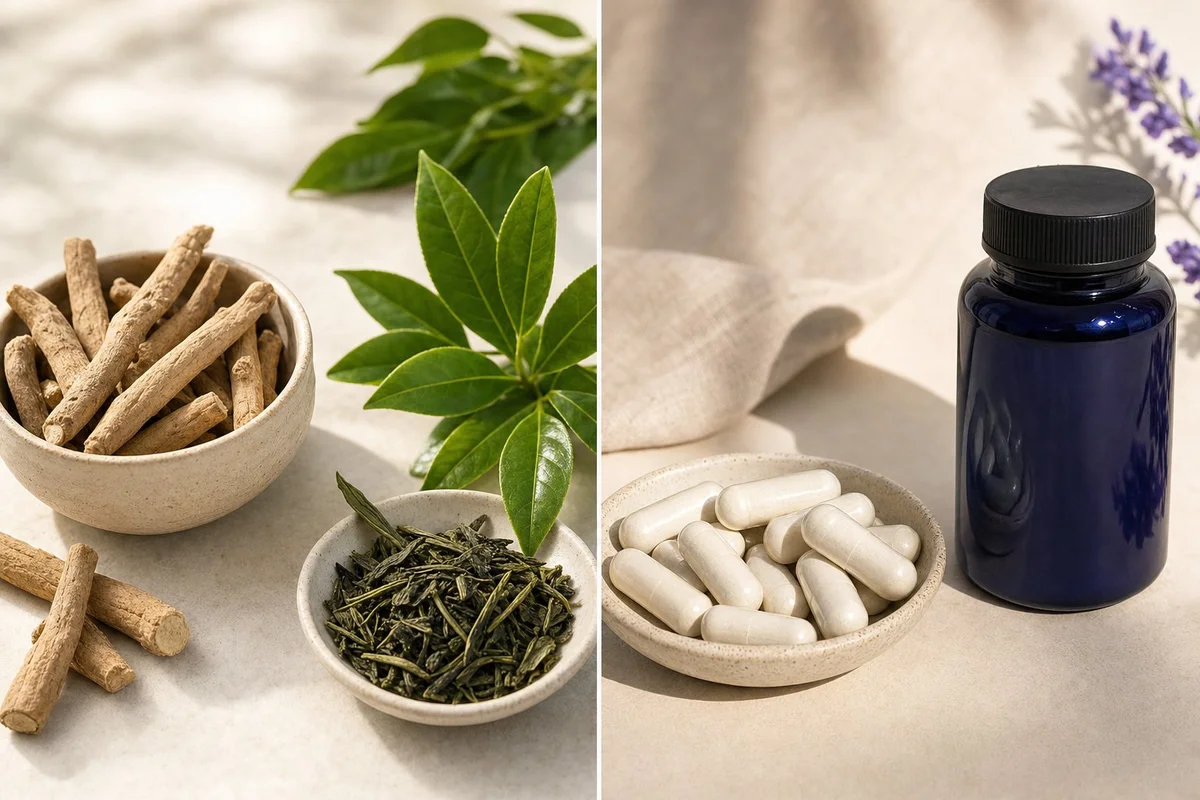
Start with evidence strength and mechanism confidence, then decide whether weaker evidence is still acceptable for your goal.
Check caution flags, stimulation or sedation profile, and interaction risk before focusing on convenience or trend.
Compare onset, duration, preparation, and evidence side by side. Similar labels do not make two ingredients interchangeable.
Start by goal
Use a curated comparison when one exists, or open the research matrix when you already know the two ingredients you want to inspect.
Energy
Compare Coffee & Green Tea →
02Sleep
Compare sleep options →
03Stress & calm
Compare stress support →
04Mood
Compare mood botanicals →
05Metabolic
Compare metabolic options →
06Build your own
Open comparison matrix →
Browse real comparison pages
These are published routes, grouped by the decision they help clarify. New comparison pages automatically stay off this hub until their route is actually built.
Compare common caffeine sources and focus stacks by dose transparency, stimulation profile, and the evidence behind their non-caffeine compounds.
Compare botanicals used around stress and mood while keeping stimulation level, evidence quality, and medication interactions visible.
Compare sleep-oriented options by timing, next-day effects, and whether the evidence is about circadian timing, relaxation, or broader sleep support.
Closely related herbs compared through shared constituents and preparation-specific safety rather than assuming similar chemistry makes them interchangeable.
Evidence and safety comparisons for popular metabolic and anti-inflammatory choices, including where supplement and medication contexts are not equivalent.
These pages are especially safety-oriented. A superficial similarity does not make the substances equivalent, interchangeable, or appropriate to combine.
Good places to start
A small set of useful entry points across energy, mood, stress, sleep, and botanical chemistry.
Use this cautiously.
This page is educational and does not replace medical advice. Evidence strength reflects research signal quality, not guaranteed outcomes, and individual response varies. Review medications, health conditions, pregnancy or nursing status, and clinician guidance before using supplements.
Decision next step
Questions
What the evidence tiers mean, and what a comparison can and cannot tell you.
Strong evidence means human clinical trials — ideally randomized and controlled — consistently support the effect. Moderate evidence has fewer or smaller human trials, limited evidence relies mostly on mechanism or small studies, and traditional or preliminary tiers rely on historical use or early-stage research rather than confirmed clinical outcomes.
Mechanism relevance shifts with the goal. Two botanicals can overlap chemically but differ in stimulation, preparation, safety, or the outcomes actually studied in humans. The comparison pages are designed to make those tradeoffs visible rather than declare a universal winner.
Not necessarily. Price often reflects extraction method, standardization, or dose form rather than efficacy. Check the actual dose and standardized-extract percentage against what was used in supporting research before assuming a pricier product performs better.
No. Comparisons here are educational and summarize published research patterns, not individualized guidance. Review current medications, health conditions, and pregnancy or nursing status with a clinician or pharmacist before starting or combining supplements.
Comparison table
The table is meant to narrow options, not finalize a decision. Follow up by reading the individual compound pages, safety notes, and cited research context where available.