Ashwagandha: The Evidence-Based Guide (Stress, Anxiety, Sleep, and Focus)
By Will
Last updated:
A comprehensive evidence-based review of ashwagandha (Withania somnifera): mechanisms, clinical research, dosage, safety, what it works for, what it does not, and how it compares with L-theanine, magnesium, and other adaptogens.
Fastest useful choice
When ashwagandha is the right choice (and when it is not)
Ashwagandha is the right choice for chronic, stress-driven symptoms — when stress has been elevated for weeks or months, when cortisol rhythms feel dysregulated, and when you can commit to a 6–8 week course of consistent daily use. It is notthe right choice for fast relief: if you need help tonight, L-theanine (100–200 mg) is faster for racing thoughts; melatonin (0.3–1 mg) is faster for sleep onset; a behavioral breathwork protocol is faster than any supplement for an acute cortisol spike.
Match the tool to the timeframe: ashwagandha for the baseline; faster tools for acute moments. See the full L-theanine article for the acute-relief counterpart.
Quick Verdict
Does Ashwagandha Work?
Yes, for the use cases the evidence actually supports. Multiple randomized trials in chronically stressed adults show standardized ashwagandha extracts (300–600 mg/day of KSM-66 or Sensoril) meaningfully reduce perceived stress, lower serum cortisol, and improve sleep quality over 4–8 weeks. The effect sizes are moderate, not dramatic. For anxiety symptoms, the evidence is positive but smaller; for athletic performance and testosterone, modest. For acute anxiety or immediate calm, it does not work — that is not what adaptogens do.
The honest summary: ashwagandha is a foundational, multi-week tool for chronic stress, not a rescue remedy. Use it when the goal is to lower the baseline, not silence a moment.
Introduction
Ashwagandha (Withania somnifera) is the most clinically studied adaptogen in modern supplement research. It is best known for stress and anxiety reduction, with growing evidence for sleep, cognition, and metabolic health. This article is the umbrella guide — covering everything you need to know in one place, with deep-dive links to each condition-specific article.
Whether you are considering ashwagandha for stress, anxiety, sleep, focus, or general resilience, this hub will help you decide if it is right for you, what dose and form to use, and what to expect over time. All claims are tied to primary studies or the Ashwagandha herb profile.
What Is Ashwagandha?
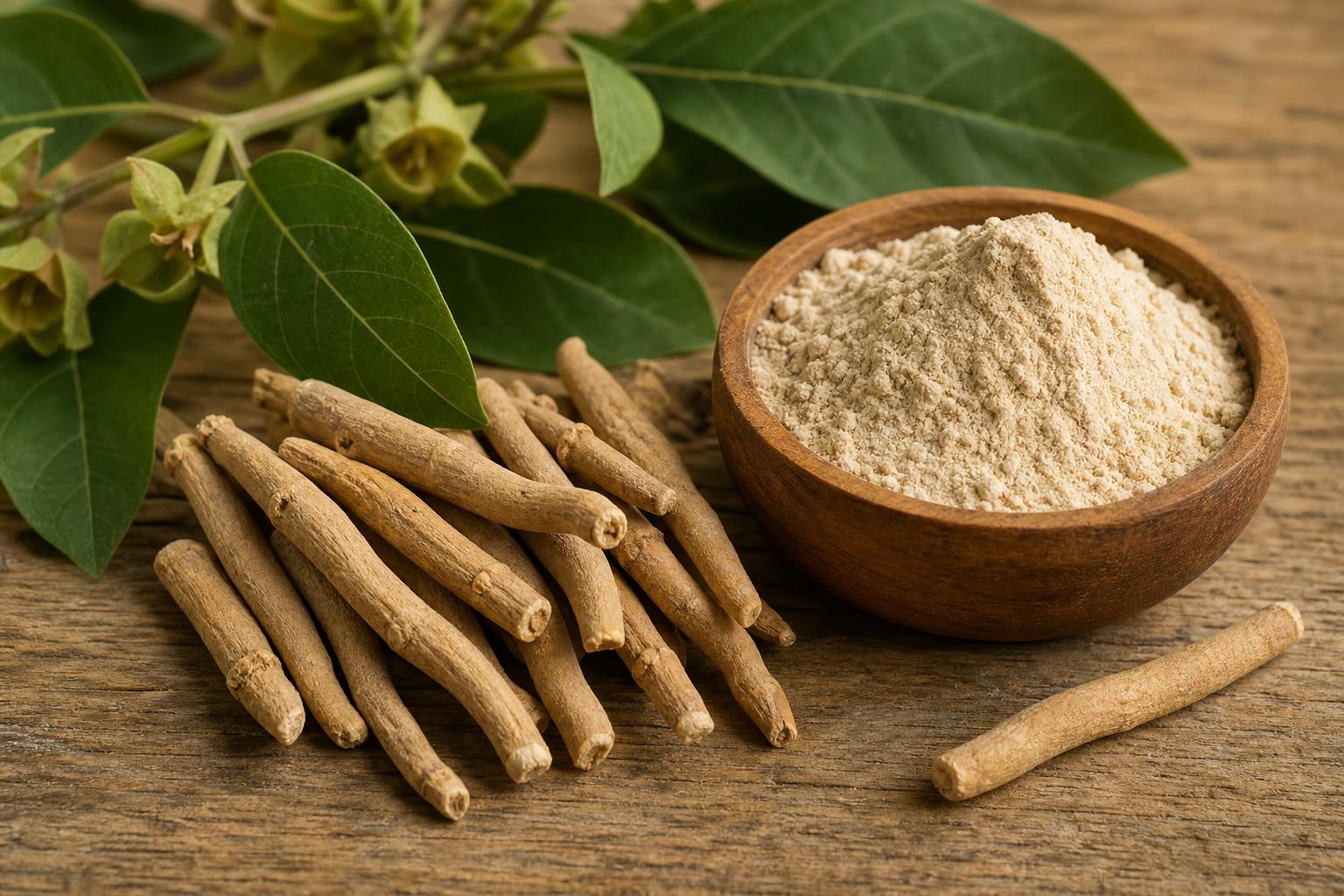
Withania somnifera is a small shrub in the Solanaceae (nightshade) family, native to India, North Africa, and the Mediterranean. In Ayurvedic medicine it is classified as a rasayana — a rejuvenating herb used to promote longevity, vitality, and resistance to disease.
The species name somnifera means “sleep-inducing” in Latin — the plant was historically used as a sedative tonic. Modern research confirms a genuine sleep benefit, though the mechanism is more nuanced than simple sedation.
Key active constituents include withanolides (steroidal lactones), withaferin A, and alkaloids. Commercial extracts are typically standardized to withanolide content (≥5%) and come in two clinically dominant patented forms: KSM-66 (full-spectrum root extract, Ixoreal Biomed) and Sensoril (root and leaf extract, Natreon). Generic root powder has a long traditional history but is less standardized and has fewer modern trials.
What Ashwagandha Is Used For
Ashwagandha has been studied across a wide range of outcomes. The strength of evidence varies considerably. Use this section to see whether ashwagandha is right for your specific goal.
| Use case | Evidence strength | Time to effect | Deep-dive |
|---|---|---|---|
| Chronic stress & cortisol | Strong | 4–8 weeks | Cortisol guide → |
| Anxiety symptoms | Moderate | 6–8 weeks | Ashwagandha for anxiety → |
| Sleep quality | Moderate | 6–10 weeks | Ashwagandha for sleep → |
| Focus & cognition | Emerging–Moderate | 4–8 weeks | Ashwagandha for ADHD/focus → |
| Athletic performance & testosterone | Emerging | 8–12 weeks | No dedicated deep-dive yet |
For most readers, the right entry point is the chronic stress / cortisol evidence — that is the strongest and most consistent body of research, and it underlies the benefits seen in anxiety and sleep. If your primary goal is sleep, see the dedicated sleep article. If anxiety is primary, see the anxiety article. If you want a head-to-head with magnesium, see ashwagandha vs magnesium for sleep. If you want the herb-level monograph, see the full Ashwagandha herb profile.
How Ashwagandha Works
Several convergent mechanisms have been proposed, based on preclinical data and plausible inference from human trial outcomes:
1. HPA Axis Modulation (Cortisol Reduction)
Ashwagandha consistently reduces morning serum cortisol in stressed adults across multiple RCTs. Elevated cortisol is a primary driver of stress-related anxiety, sleep disruption, and immune dysregulation. By blunting the HPA axis stress response, ashwagandha lowers the physiological baseline of stress reactivity.
2. GABA-A Receptor Activity
Withaferin A and related withanolides have demonstrated GABA-A receptor binding activity in vitro and in animal models. GABA-A agonism is the mechanism of benzodiazepines and many common anxiolytics. The magnitude of this effect in humans at standard doses is uncertain and likely modest.
3. Thyroid Modulation
Ashwagandha may modestly increase T3 and T4 thyroid hormone levels. This is part of why some users report improved energy, and part of why it is contraindicated in hyperthyroidism. People on thyroid medication should monitor levels carefully with their clinician.
4. Anti-Inflammatory and Antioxidant Effects
Withanolides modulate NF-κB and other inflammatory signaling pathways. Chronic stress is associated with low-grade inflammation; ashwagandha’s anti-inflammatory activity may be part of the mechanism behind subjective well-being improvements.
Evidence Summary
Evidence Snapshot
Evidence: StrongerAshwagandha & Stress / Cortisol
Human evidence
Multiple randomized controlled trials (n=50–150) in chronically stressed adults show significant reductions in perceived stress (PSS), serum cortisol, and anxiety scores (HAM-A, GAD-7) over 4–8 weeks. Effect sizes are moderate (Cohen's d ≈ 0.5–1.0). KSM-66 and Sensoril extracts are most studied.
Research signal
HPA axis modulation and cortisol reduction are well-documented in human trials. GABA-A binding activity demonstrated in vitro. Thyroid and anti-inflammatory pathways have supporting preclinical evidence.
Safety profile
Generally well-tolerated at 300–600 mg/day for 8–12 weeks. Rare hepatotoxicity cases reported. Contraindicated in pregnancy. Potential thyroid interactions at therapeutic doses. Caution with autoimmune disease and immunosuppressants.
Key trials reviewed:
- Chandrasekhar et al. (2012) — KSM-66, 600 mg/day, 8 weeks, n=64 (stress and anxiety)
- Langade et al. (2019) — KSM-66, 300 mg twice daily, 10 weeks, n=58 (insomnia with anxiety)
- Langade et al. (2021) — KSM-66, 600 mg/day, 8 weeks, n=150 (primary insomnia)
- Cheah et al. (2021) — Sensoril 240 mg/day, 8 weeks, n=80 (sleep quality)
- Salve et al. (2019) — Adaptogenic/resting safety evaluation, n=80
Full reference table in Sources section below.
Dosage and Usage
Dosage Reference — Standardized Extract Protocols
This table scrolls horizontally on small screens. Use Tab to focus the table region, then scroll with arrow keys or touch.
| Extract | Daily Dose | Timing | Duration |
|---|---|---|---|
| KSM-66 | 300–600 mg | Evening or split (AM/PM) | 6–12 weeks |
| Sensoril | 125–250 mg | Evening | 8–12 weeks |
| Root powder | 3–6 g | Evening (milk or water) | Traditional — variable |
Doses shown are based on clinical trial protocols. Start at the lower end and assess tolerance before increasing. Take with food to reduce GI sensitivity. Most trials use consistent daily dosing for 6–8 weeks minimum.
Affiliate Product Recommendations
These products use the extract forms and dose ranges studied in the clinical trials reviewed above. Affiliate links support this site at no additional cost to you.
Best for: Stress & Anxiety
KSM-66 Ashwagandha Extract
Patented full-spectrum root extract. Most-studied form for stress and anxiety. Look for ≥300 mg per capsule, standardized to ≥5% withanolides.
View on Amazon →Best for: Sleep & Lower Dose
Sensoril Ashwagandha Extract
Root and leaf extract with strong clinical backing at lower mg doses. Well-suited for sensitive individuals or sleep-specific protocols.
View on Amazon →Safety and Side Effects
Educational Safety Notice
Safety Summary — Ashwagandha
- Generally well-tolerated at 300–600 mg/day for up to 12 weeks in healthy adults across clinical trials.
- Pregnancy / lactation: Avoid. Animal studies show uterotonic effects; human safety data is insufficient.
- Autoimmune disease: Ashwagandha may stimulate immune function; use with caution or avoid in lupus, rheumatoid arthritis, MS, or on immunosuppressants.
- Thyroid disorders: Ashwagandha may increase T3/T4 levels. Use with caution if you have hyperthyroidism or take thyroid medication (monitor TSH).
- Hepatotoxicity (rare): Multiple case reports of liver injury have been published, most resolving on discontinuation. Avoid if you have liver disease or take hepatotoxic medications. Discontinue and seek medical attention if symptoms appear (jaundice, dark urine, severe fatigue, abdominal pain).
- Sedative medications: May potentiate effects of benzodiazepines, sleep aids, alcohol, and other CNS depressants.
- Psychiatric medications (SSRIs, SNRIs, MAOIs): Limited interaction data; possible additive sedative or serotonergic effects. Consult a clinician before combining.
- GI discomfort: Loose stools, nausea reported in a minority of users, particularly at higher doses. Taking with food reduces incidence.
For a complete breakdown of adverse events, drug interactions, and contraindications, see the full Ashwagandha safety profile.
Stacking Ashwagandha With Other Supplements
Ashwagandha pairs well with several other supplements because it works on the baseline (HPA axis, cortisol over weeks) while they cover the acute side (racing thoughts, sleep onset, muscle tension). Common stacks:
Ashwagandha + L-theanine
Foundational stress reduction (ashwagandha, weeks) plus acute calm focus (L-theanine, 30–60 min). See the L-theanine article.
Ashwagandha + Magnesium glycinate
Stress baseline (ashwagandha) plus evening relaxation and muscle tension support (magnesium). Compare in ashwagandha vs magnesium for sleep.
Ashwagandha + Rhodiola
HPA axis regulation (ashwagandha) plus acute stress resilience and anti-fatigue (rhodiola). Best for high-demand performance periods.
Ashwagandha + Melatonin
For sleep: ashwagandha addresses stress-driven insomnia over weeks; melatonin signals circadian onset acutely. Different mechanisms — complementary.
Introduce one supplement at a time so you can isolate what is helping (or causing side effects). Allow 1–2 weeks between additions.
Frequently Asked Questions
What is ashwagandha best for?
Ashwagandha has the strongest evidence for reducing perceived stress and cortisol in chronically stressed adults (multiple RCTs of KSM-66 or Sensoril at 300–600 mg/day over 4–8 weeks). Secondary evidence supports sleep quality improvement in stress-driven insomnia, and modest effects on anxiety symptoms. Evidence for focus, testosterone, and athletic performance is positive but more limited.
How long does ashwagandha take to work?
Most studies report meaningful effects after 4–8 weeks of consistent daily use at 300–600 mg/day of a standardized extract. Some people notice lighter subjective effects within 2 weeks. Ashwagandha is not a same-day or acute supplement; it works by modulating the HPA axis over time.
Is ashwagandha safe to take every day?
Short- to medium-term daily use (8–12 weeks) at standard doses (300–600 mg/day of KSM-66 or Sensoril) is well-tolerated in healthy adults across most clinical trials. Long-term safety data beyond 3 months is more limited. Rare hepatotoxicity cases have been reported in post-market surveillance. Avoid in pregnancy, autoimmune disease, hyperthyroidism, and with sedatives or immunosuppressants unless a clinician supervises.
Is ashwagandha the same as L-theanine?
No — they work very differently. Ashwagandha is an adaptogen that lowers cortisol over weeks (slow, foundational). L-theanine is an amino acid that raises calming alpha-wave activity within 30–60 minutes (fast, acute). For racing thoughts at bedtime, L-theanine is the faster tool. For chronic stress load, ashwagandha is the better long-term answer. Many people stack them.
Which form of ashwagandha is best?
KSM-66 (full-spectrum root extract, ≥5% withanolides) and Sensoril (root and leaf extract) are the two patented extracts with the strongest clinical research. KSM-66 has more anxiety and stress trials; Sensoril has more insomnia and cortisol data. Generic "ashwagandha root powder" is traditional but less standardized. Always look for a clearly labeled extract and withanolide percentage.
Can I take ashwagandha with magnesium?
Yes — they are commonly stacked because they address different aspects of stress. Ashwagandha modulates the HPA axis and cortisol over weeks; magnesium supports nervous-system regulation acutely and is often taken in the evening. There are no major documented interactions. Introduce them one at a time so you can isolate effects.
Does ashwagandha cause liver damage?
Rare case reports of liver injury have been published, most resolving on discontinuation. The absolute risk appears low at standard doses of well-characterized extracts, but it is real. If you have pre-existing liver disease, take hepatotoxic medications, or develop symptoms (jaundice, dark urine, severe fatigue, right-sided abdominal pain), stop and seek medical attention.
Sources
This table scrolls horizontally on small screens. Use Tab to focus the table region, then scroll with arrow keys or touch.
| # | Study | Authors | Year | Link |
|---|---|---|---|---|
| 1 | A Prospective, Randomized Double-Blind, Placebo-Controlled Study of Safety and Efficacy of a High-Concentration Full-Spectrum Extract of Ashwagandha Root in Reducing Stress and Anxiety | Chandrasekhar K, Kapoor J, Anishetty S | 2012 | PMID 23120875 |
| 2 | Efficacy and Safety of Ashwagandha (Withania somnifera) Root Extract in Insomnia and Anxiety | Langade D, Kanchi S, Salve J, Debnath K, Ambegaokar D | 2019 | PMID 31564735 |
| 3 | A Randomized, Double Blind, Placebo Controlled, Cross-over Study to Evaluate the Efficacy and Safety of Ashwagandha Extract on Sleep Quality in Healthy Adults | Cheah KL, Norhayati MN, Husniati Yaacob L, Abdul Rahman R | 2021 | PMID 34559859 |
| 4 | Efficacy and Tolerability of Ashwagandha Root Extract in Subthreshold Sleep Difficulties | Langade D, Thakare V, Dambhare S | 2021 | PMID 33582027 |
| 5 | Adaptogenic and Anxiolytic Effects of Ashwagandha Root Extract | Salve J, Pate S, Debnath K, Langade D | 2019 | PMID 32021735 |
Affiliate-ready sourcing
Product recommendations
Use these as sourcing starting points, not medical recommendations. Product quality, dose, and fit still need review.
Affiliate disclosure: we may earn a commission from qualifying links at no extra cost to you. How we stay independent.
Free safety checklist
Get future research notes by email
Evidence-first supplement updates, safety context, and new guide announcements. No diagnosis, treatment, or personal medical advice.
We use your email to send the checklist and occasional evidence-first supplement updates. Unsubscribe anytime. Privacy policy.
Newsletter
Continue with the newsletter archive
Short notes built for cautious supplement decisions.