Elderberry for Colds & Flu: What Human Trials Actually Show
What the evidence actually shows
Direct answer
An evidence-first review of elderberry for respiratory symptoms: small randomized trials, uncertain prevention and treatment benefits, cytokine-storm misinformation, product differences, and safety. The page links 6 cited sources for verification.
Quick answer: Elderberry (Sambucus nigra) has shown possible relief of cold and influenza symptoms in a small number of human randomized trials, but study quality, product variation, and limited replication make the size and reliability of any benefit uncertain. Prevention has not been convincingly demonstrated. Claims that elderberry reliably shortens every illness by 2–4 days, works within 24–48 hours, or clinically controls a “cytokine storm” are not established. This is an evidence review, not a treatment recommendation.
Safety: Raw or unripe berries and some other parts of the plant contain cyanide-producing compounds and can cause poisoning. Proper preparation matters; pregnancy, breastfeeding, and medication-combination safety are insufficiently studied. Elderberry does not replace vaccines, indicated antivirals, or medical care.
Editorial disclosure: Owner-authorized AI scientific editorial review. Clinical trial outcomes are distinguished from in-vitro mechanisms and observational or theoretical concerns.
At a Glance
This table scrolls horizontally on small screens. Use Tab to focus the table region, then scroll with arrow keys or touch.
| Question | What the evidence supports |
|---|---|
| Can it shorten a cold or flu? | Possibly. Some small human RCTs are positive, but confidence is limited and results are not transferable to every commercial product. |
| Does it prevent respiratory infections? | Not established. The air-traveler RCT found a nonsignificant difference in cold incidence. |
| Does it reliably work within 24–48 hours? | Not demonstrated. No dependable individual onset time has been established. |
| Is there a proven best dose or start day? | No. Trial regimens differ; results do not establish one universal treatment protocol. |
| Does it cause a cytokine storm? | No clinical link demonstrated. The popular claim extrapolates from a cell experiment. |
| Main cautions | Unripe/raw plant material, product quality, and limited safety data in pregnancy, breastfeeding, children, and people taking medications. |
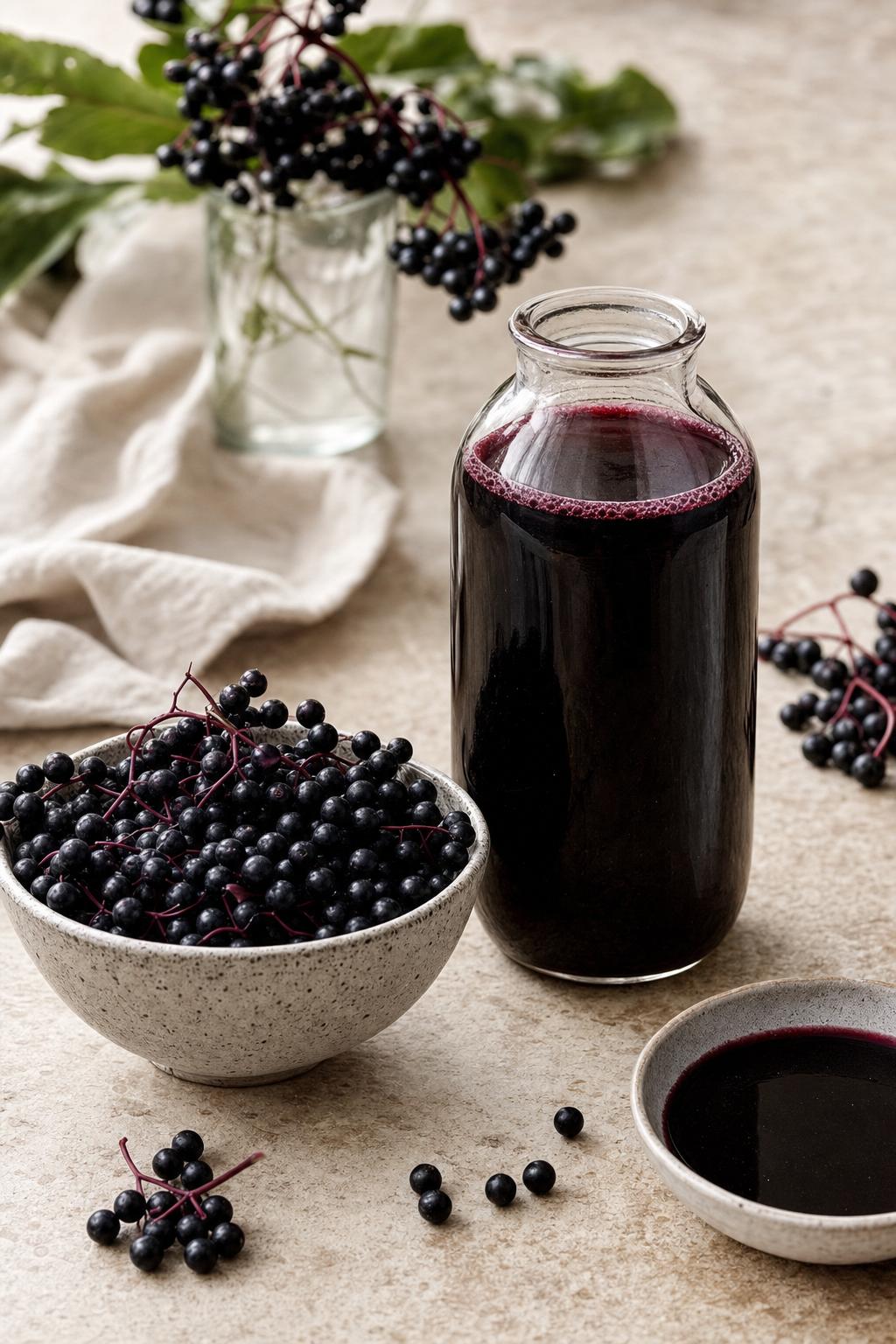
What the human trials actually found
This table scrolls horizontally on small screens. Use Tab to focus the table region, then scroll with arrow keys or touch.
| Source | Study design | Key finding | Important limit |
|---|---|---|---|
| Zakay-Rones 2004 | Human randomized trial, 60 adults with influenza | Participants using one studied syrup reported shorter symptom duration than placebo. | Small trial; one preparation and population; does not prove the same effect for other products. |
| Tiralongo 2016 | Human randomized trial, 312 international air travelers | Participants who developed colds recorded fewer cold-episode days and a lower symptom burden with the studied extract. | Cold incidence was not significantly lower (17 placebo versus 12 elderberry; p=0.4). |
| Hawkins 2019 | Meta-analysis of four small human trials | Reported a pooled improvement in respiratory symptom outcomes. | Few small studies, product differences, and limited precision. |
| Wieland 2021 | Systematic review of human trials | Described possible treatment signals, but the overall benefits and harms remained uncertain. | Small evidence base and important risk-of-bias limitations; stronger confirmation is needed. |
The air-traveler trial's positive duration result should not be rewritten as “everyone recovers two days faster.” The reported group outcomes depended on who became ill, which extract was studied, and how symptoms were counted. Likewise, a pooled statistical effect does not establish that an individual will feel a noticeable benefit.
NIH NCCIH describes elderberry's possible symptom benefit as preliminary, rather than a proven therapy. NCCIH elderberry evidence and safety
Mechanisms: what cell experiments cannot prove
Antiviral activity
In laboratory experiments, elderberry flavonoids interacted with influenza virus binding or entry pathways (Roschek et al., 2009; PMID 19682714; in vitro). That observation supports a plausible mechanism to investigate, but it does not prove that swallowing a retail syrup blocks viral spread or changes clinical outcomes in infected people.
Cytokines and the “cytokine storm” misconception
The widely repeated warning traces to a 2001 experiment exposing blood-derived human monocytes to a particular elderberry-containing product (Barak et al.; PMID 11399518; in vitro/ex vivo). Some measured cytokines increased in the laboratory. A change in cytokines in isolated cells is not a documented cytokine storm in a person.
Wieland and colleagues' 2021 systematic review screened 1,187 records and found no clinical studies linking elderberry use to cytokine-storm-type inflammatory outcomes (PMID 33827515; systematic review). Human cytokine data were sparse: one placebo-controlled study found no significant increase in measured markers, while small uncontrolled studies reported mixed or decreasing markers. That evidence does not establish either that elderberry provokes cytokine storms or that it reliably suppresses dangerous inflammation.
An absent demonstrated clinical link is not an assurance of safety in every situation; it is a reason to stop presenting the cell finding as an established human danger.
Timing and amount: research context, not instructions
Trials tested particular syrups, extracts, amounts, and illness windows. Those exposures are descriptions of the research, not a validated general-purpose dose or a recommendation to begin elderberry on the first day of symptoms.
The studies have not directly established that a particular dose is optimal, that treatment beginning on day one outperforms treatment beginning on day three, or that different gummies, tinctures, capsules, and syrups can be treated as interchangeable. There is also no established clinical onset clock.
Readers should not delay evidence-based treatment of influenza or another serious respiratory infection to try a supplement.
Safety and uncertainties
Raw plant material. Raw or unripe berries and other plant parts, including leaves and stems, can contain cyanogenic compounds. Poisoning can cause nausea, vomiting, and severe diarrhea. Correct preparation reduces this hazard, but “natural” or “commercially sold” alone does not establish product quality. NCCIH
Pregnancy, breastfeeding, and children. Human safety data are limited, especially for pregnancy and breastfeeding. An adult trial of one extract cannot be assumed to establish pediatric safety.
Medication and immune conditions. Direct human evidence for specific elderberry interactions is limited. Claims that it necessarily aggravates autoimmune disorders or necessarily improves immunity are both stronger than the available research. People receiving immunosuppressive treatment or managing complex medical conditions should discuss supplement use with a qualified healthcare professional.
Adverse events. Trials generally recorded limited short-term adverse effects, but uncommon harms and long-term safety remain poorly characterized. A report of tolerability in a small trial cannot establish universal safety.
Not a substitute for established care. Elderberry has not been shown to prevent or treat COVID-19. Vaccination, clinical assessment, and indicated prescription treatment remain separate from the supplement evidence. NCCIH
Frequently asked questions
Does elderberry prevent colds or flu?
That has not been demonstrated reliably. In the 312-person air-traveler trial, fewer participants taking elderberry developed a cold, but the between-group difference was not statistically significant (Tiralongo et al., 2016; human RCT).
Does it reduce symptoms within 24–48 hours?
There is no reliable universal onset estimate. Small studies reported selected symptom differences but did not establish a predictable clock for personal relief.
Will it shorten an illness by two to four days?
Individual studies have reported effects of that approximate magnitude for selected products and outcomes. That should not be promoted as a dependable result for everyone with a cold or flu.
Does elderberry cause a cytokine storm?
The claim has no demonstrated human clinical basis. The widely circulated source is a cell study; clinical studies have not established the alleged syndrome. This does not prove all possible adverse effects have been ruled out.
What about combining it with other cold products or giving it to children?
Specific combinations and pediatric regimens cannot be declared universally safe on the strength of a few adult elderberry trials. Product ingredients, age, medicines, and health conditions matter.
Bottom line
Small human studies suggest that some elderberry preparations may help selected respiratory symptoms, but prevention, optimal regimen, reliable time to benefit, and broad product equivalence remain unproven. In-vitro antiviral and cytokine effects are valuable research leads, not evidence that elderberry stops viral replication or treats systemic inflammation in humans.
Related Articles
Source ledger
References
6 sources
- 01Black elderberry (Sambucus nigra) supplementation effectively treats upper respiratory symptoms: a meta-analysis of randomized, controlled clinical trials Hawkins J, Baker C, Cherry L, Dunne E · 2019PMID 30670267 PubMed →
- 02Randomized study of the efficacy and safety of oral elderberry extract in the treatment of influenza A and B virus infections Zakay-Rones Z, Thom E, Wollan T, Wadstein J · 2004PMID 15080016 PubMed →
- 03Elderberry supplementation reduces cold duration and symptoms in air-travellers: a randomized, double-blind placebo-controlled clinical trial Tiralongo E, Wee SS, Lea RA · 2016PMID 27023596 PubMed →
- 04Elderberry for prevention and treatment of viral respiratory illnesses: a systematic review Wieland LS, Piechotta V, Feinberg T, Ludeman E, Hutton B, Kanji S, Seely D, Garritty C · 2021PMID 33827515 PubMed →
- 05Elderberry flavonoids bind to and prevent H1N1 infection in vitro Roschek B Jr, Fink RC, McMichael MD, Li D, Alberte RS · 2009PMID 19682714 PubMed →
- 06The effect of Sambucol, a black elderberry-based, natural product, on the production of human cytokines: I. Inflammatory cytokines Barak V, Halperin T, Kalickman I · 2001PMID 11399518 PubMed →