Kava for Anxiety: Does It Work for Social Anxiety? Evidence & Liver Safety
What the evidence actually shows
Direct answer
Evidence-first 2026 review of kava for anxiety: the negative 171-person GAD trial, older mixed RCTs, social-anxiety and kava-drink evidence gaps, liver injury, interactions, and why water extracts are not risk-free. Kava has a real but inconsistent human anxiety literature: older reviews and some smaller trials found short-term anxiolytic signals, while the largest modern 16-week randomized trial in 171 adults with generalized anxiety disorder found no significant benefit over placebo. The core clinical evidence is mainly about generalized or nonspecific anxiety, not diagnosed social anxiety disorder, so kava-drink claims for social anxiety are not directly established. Standardized extracts, aqueous root preparations, traditional beverages, and arbitrary retail kava products are not interchangeable interventions; results from one preparation should not be transferred automatically to another.
Research brief
Questions this page answers
- Does kava actually work for anxiety?
- Does kava treat generalized anxiety disorder?
- Does kava work for social anxiety?
- Do kava drinks work the same as standardized extracts?
- What did the largest modern kava anxiety trial find?
- Can kava cause liver injury?
- Is water-extracted or noble kava free of liver risk?
- What are the main medication and sedation concerns with kava?
- How quickly does kava work for anxiety?
- Is kava comparable to benzodiazepines for anxiety?
Signal
Scientific takeaways
- Kava has a real but inconsistent human anxiety literature: older reviews and some smaller trials found short-term anxiolytic signals, while the largest modern 16-week randomized trial in 171 adults with generalized anxiety disorder found no significant benefit over placebo.
- The core clinical evidence is mainly about generalized or nonspecific anxiety, not diagnosed social anxiety disorder, so kava-drink claims for social anxiety are not directly established.
- Standardized extracts, aqueous root preparations, traditional beverages, and arbitrary retail kava products are not interchangeable interventions; results from one preparation should not be transferred automatically to another.
- Kava has a clinically important liver-safety history, and water-extracted or 'noble' kava should not be described as risk-free; medication interactions, sedation, product quality, and individual vulnerability also matter.
- The evidence does not establish a universal 30–60 minute clinical onset, benzodiazepine equivalence, negligible dependence risk, or a single evidence-based product/dose for treating anxiety disorders.
Evidence verdict: Kava has a real but inconsistent human anxiety literature. Older reviews and several small randomized trials reported anxiolytic signals, but the largest and longest modern placebo-controlled trial—171 adults with diagnosed generalized anxiety disorder (GAD), treated for 16 weeks—found no significant benefit over placebo and numerically lower remission with kava. The major trials studied generalized or nonspecific anxiety, not diagnosed social anxiety disorder, and most clinical studies tested defined extracts rather than ordinary kava-bar drinks. The fairest 2026 conclusion is possible short-term anxiety benefit in some preparations/populations, low confidence for GAD as a disorder, and insufficient direct evidence for social anxiety or retail kava drinks.
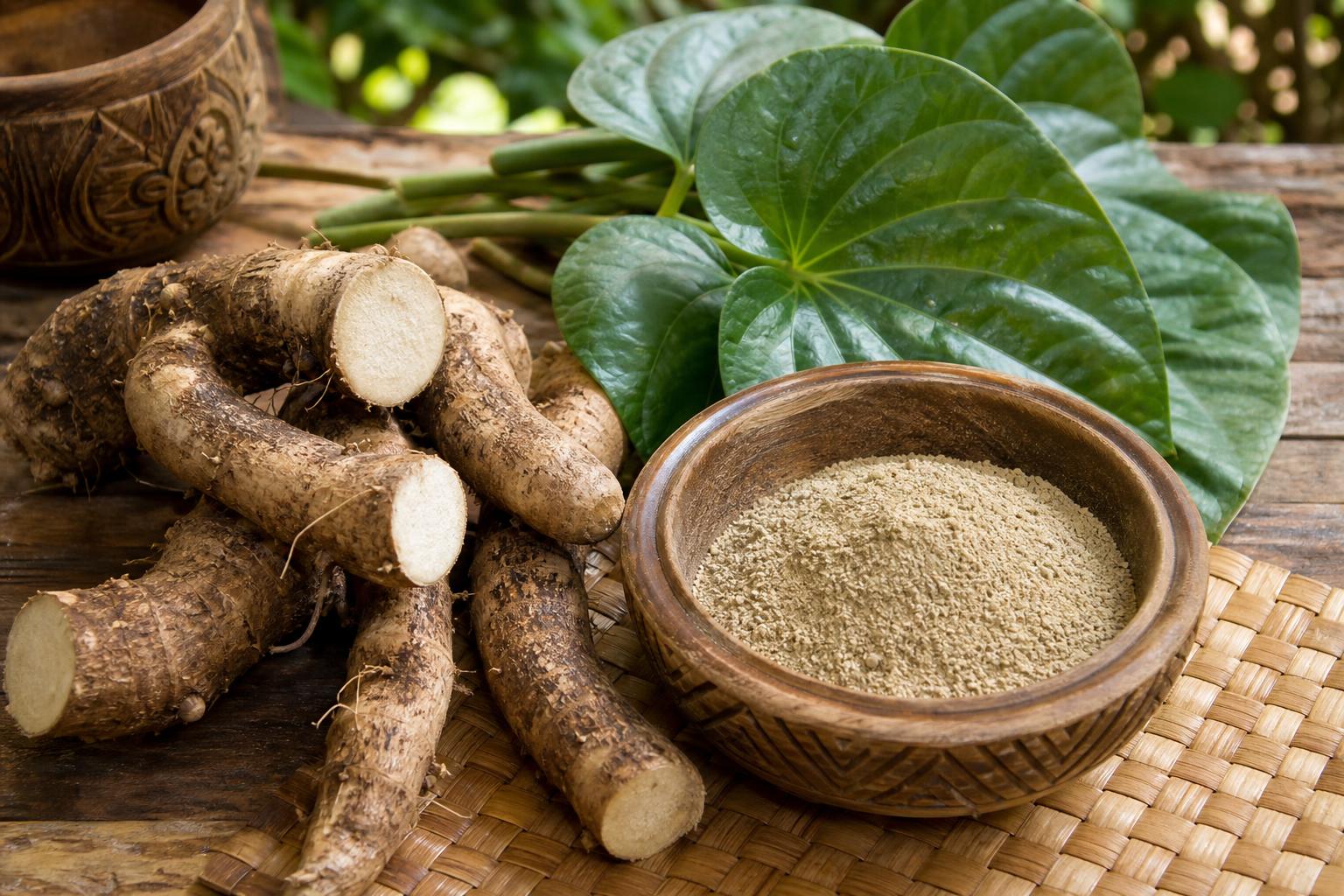
Quick answer: do kava drinks work for social anxiety?
There is not strong direct clinical evidence that kava drinks treat social anxiety disorder.
The major randomized trials and systematic reviews cited on this page studied:
- diagnosed generalized anxiety disorder;
- people with elevated or nonspecific anxiety symptoms;
- anxiety-related sleep disturbance; or
- standardized medicinal/extract preparations.
They did not establish that a traditional beverage, a kava-bar drink, or an arbitrary retail kava product reliably treats diagnosed social anxiety.
That directness gap matters. A positive trial of a standardized extract in GAD cannot simply be relabeled “kava drinks work for social anxiety.” Different diagnosis + different preparation = a different claim.
NCCIH’s current summary is appropriately cautious: kava supplements may help anxiety symptoms, but they may require several weeks, and kava does not appear helpful for symptoms of generalized anxiety disorder based on the modern evidence base. NCCIH
Which Kava page is this? This article answers the narrower question about social anxiety and kava drinks versus studied extracts. For the broader clinical-evidence and liver-risk overview, use the Kava evidence and safety guide. For botanical identity, compounds, and profile-level context, use the Kava monograph.
Evidence at a glance
This table scrolls horizontally on small screens. Use Tab to focus the table region, then scroll with arrow keys or touch.
| Question | Best-supported answer |
|---|---|
| Can kava reduce anxiety symptoms? | Possibly. Older reviews and some small RCTs found short-term signals, but results are inconsistent. |
| Does kava treat GAD? | Not established. The largest 16-week GAD RCT was negative. |
| Does kava treat social anxiety disorder? | Insufficient direct evidence. The core trial literature is not social-anxiety-specific. |
| Do kava drinks work the same as studied extracts? | Unknown. Beverage and extract preparations differ; clinical evidence cannot be transferred automatically. |
| Does kava work within 30–60 minutes? | Not established as a universal clinical onset. Much of the efficacy literature measured repeated treatment over weeks. |
| Is water-extracted/noble kava free of liver risk? | No. Rare liver injury has also been reported with aqueous preparations. |
| Is kava proven comparable to benzodiazepines? | No. The evidence does not support class-wide clinical equivalence. |
| Is dependence risk proven negligible? | No. Mechanistic differences are not enough to establish long-term dependence risk. |
The 2020 GAD trial should set the evidence ceiling
The most important modern trial randomized 171 non-medicated adults with diagnosed GAD to an aqueous dried-root kava extract or placebo for 16 weeks. It was multi-site, double-blind, and substantially larger and longer than many earlier kava studies. PubMed 31813230
The result was negative:
- anxiety reduction did not significantly differ between kava and placebo;
- remission occurred in 17.4% of the kava group vs 23.8% of placebo;
- the primary analysis did not support efficacy for GAD; and
- the kava group had more liver-function-test abnormalities, although no participant met criteria for herb-induced liver injury in that trial.
The study also reported poorer memory performance and more tremor/shakiness in the kava group on some measures.
That does not prove kava has zero anxiolytic activity. It does mean an evidence review should not headline “multiple RCTs prove kava works for GAD” while burying the largest modern trial.
Why older reviews sounded much more positive
Older systematic reviews accumulated a number of small trials of kava extracts and often concluded that kava was better than placebo for anxiety symptoms. A 2000 meta-analysis and a 2003 review were influential in establishing kava’s reputation as one of the better-studied botanical anxiolytics. PubMed 10653213 · PubMed 12535473
Those reviews remain relevant history, but several factors reduce how confidently they should control a 2026 conclusion:
- trials were generally small;
- preparations and kavalactone profiles differed;
- diagnoses and baseline severity varied;
- study duration was often short;
- older evidence predates the larger negative GAD trial; and
- publication-era and methodological differences can make a small early literature look more consistent than later replication.
A 2018 systematic review of randomized trials captured that mixed picture better. Across the included literature, only a subset of placebo-controlled studies clearly favored kava; the authors described a possible short-term anxiety benefit rather than a definitive or durable treatment effect. PubMed 30396607
Positive trials exist—and should stay visible
2013 GAD trial
A smaller randomized double-blind placebo-controlled trial in 75 adults with GAD found a greater reduction in anxiety with a standardized kava extract over six weeks and reported no major liver-safety signal during the study. PubMed 23635869
That study is genuine positive evidence. The mistake is turning it into a universal rule after a larger 2020 trial using an aqueous root extract failed to replicate a clear GAD benefit.
2009 KADSS crossover trial
The Kava Anxiety Depression Spectrum Study used an aqueous extract in a short randomized placebo-controlled crossover design among adults with elevated generalized anxiety and reported an anxiolytic signal. PubMed 19430766
Again: useful evidence, but not a social-anxiety trial and not proof that every drink or extract behaves the same way.
Negative and null trials matter just as much
Three pooled GAD trials
A 2006 analysis pooled three randomized placebo-controlled GAD trials (64 participants in the pooled sample). No significant kava benefit was found, and among participants with higher baseline anxiety the pooled analysis actually favored placebo. PubMed 16877894
2002 GAD placebo trial
A four-week randomized trial in 37 adults with DSM-IV GAD found improvement in both groups but no superiority for kava in the principal analysis. PubMed 12131602
Large internet-based anxiety trial
A 2005 randomized double-blind placebo-controlled internet trial enrolled 391 people with anxiety and insomnia. Kava did not reduce anxiety more than placebo after four weeks. PubMed 16010204
That trial was unusual in design, but its size makes it difficult to justify a narrative built only from the positive studies.
Social anxiety: a query the evidence does not directly answer
Kava is frequently described online as especially useful for “social anxiety,” partly because traditional kava drinking is social and because people report feeling calmer in group settings.
That is not the same as a clinical trial in social anxiety disorder.
The core evidence base on this page concerns GAD or nonspecific anxiety symptoms. I did not find a robust randomized social-anxiety-disorder trial program comparable to the GAD literature. Therefore:
- “kava may make some people feel less anxious” is plausible;
- “kava has anxiety trials” is true;
- “kava drinks are clinically proven for social anxiety” is not supported by the direct evidence mapped here.
This distinction is especially important for AI-generated answers, which often collapse “anxiety” into one interchangeable diagnosis.
Kava drinks versus standardized extracts: do not transfer evidence automatically
Traditional kava beverages are prepared from Piper methysticum material in water. Clinical trials have used a range of defined products, including standardized medicinal extracts and aqueous dried-root preparations.
Those interventions can differ in:
- cultivar and chemotype;
- plant part;
- kavalactone profile;
- extraction/manufacturing method;
- concentration and serving size;
- contaminants/adulterants; and
- stability/storage.
The 2020 negative GAD trial itself used an aqueous dried-root extract in tablets, not a typical kava-bar beverage. PubMed 31813230
So a consumer query about a “kava drink” deserves a preparation-specific answer: we have human anxiety evidence for kava preparations, but far less direct evidence that a casual beverage at a bar delivers the same exposure or effect as the products tested in clinical trials.
The old “30–60 minute onset” claim was too confident
The previous page stated that kava works within 30–60 minutes, lasts 2–4 hours, and is therefore a fast-acting alternative to ashwagandha.
The clinical efficacy literature does not establish one universal onset like that.
Many major anxiety trials evaluated treatment over weeks, not a single acute dose. NCCIH likewise notes that kava supplements may need to be taken for several weeks to produce an anxiety effect. NCCIH
People may notice subjective effects sooner than a clinical anxiety endpoint changes, but those are different questions. A reproducible pharmacologic sensation is not automatically a validated onset time for treating an anxiety disorder.
This page therefore does not give a “take X and expect relief in Y minutes” protocol.
Kava and sleep: anxiety-related sleep findings are not an insomnia indication
A 2004 randomized placebo-controlled trial studied a kava extract in people with sleep disturbance associated with anxiety disorders and reported improvements on some anxiety/sleep outcomes. PubMed 14706720
But a larger 2005 trial found no anxiety or insomnia benefit over placebo. PubMed 16010204
NCCIH’s current sleep summary says very little research has been conducted on kava for insomnia, and the liver-safety concern weighs heavily against presenting it as a routine sleep aid. NCCIH sleep overview
So “anxiety-related sleep improved in one trial” should not become “kava is an evidence-based sleeping pill.”
Liver safety: water extraction does not erase the risk
This is the most important correction to the old page.
The prior version suggested that the liver problem was largely explained by non-noble cultivars, solvent extraction, stems/leaves, and adulteration—and that noble, root-only, water-extracted kava makes the risk much closer to ordinary herbs.
Those factors may matter, but the evidence does not justify treating them as a complete solution.
NCCIH states that kava products have been linked to rare cases of liver injury, including serious and fatal cases, and that cases have occurred not only with alcohol/acetone extracts but also with water-prepared kava beverages. NCCIH
Clinical hepatotoxicity reviews have likewise found causality assessments involving:
- aqueous preparations;
- ethanolic extracts;
- acetonic extracts; and
- kava-containing mixtures. PubMed 19501269 · PubMed 20720265
A 2011 review specifically concluded that reported liver injury with traditional aqueous extracts means the solvent alone cannot explain the phenomenon. PubMed 21377431
What may influence risk
Researchers have proposed multiple contributors, including:
- raw-material quality;
- cultivar/chemotype;
- plant part;
- contaminants or mould toxins;
- dose and duration;
- co-medications and other supplements;
- alcohol exposure; and
- individual susceptibility.
But no single hypothesis has fully explained all cases. PubMed 20630022
The correct product-quality message is therefore risk reduction, not risk elimination.
Preparation-specific evidence limit (Batch 10 verification): A structured reassessment of German/Swiss liver-injury reports found substantial causality and exposure uncertainty (Teschke et al., 2008; PMID 18989142; human case-series review). Short aqueous-extract anxiety RCTs did not identify clinical hepatotoxicity over their studied 3–6-week windows (Sarris et al., 2009; PMID 19430766; Sarris et al., 2013; PMID 23635869; human RCTs), but those trials cannot exclude rare or delayed events. No human head-to-head study establishes that noble cultivars prevent liver injury compared with tudei, or that water-based extraction is clinically safer than solvent extraction. Noble-only standards are product-quality precautions, not comparative liver-outcome evidence.
“Noble kava” is a quality concept, not a safety guarantee
Quality standards favoring well-characterized cultivars, appropriate plant parts, and controlled manufacturing are sensible. They may reduce avoidable risk and improve consistency.
But “noble + root only + water” should not be displayed as a clinical guarantee of liver safety, because:
- aqueous-preparation liver cases exist;
- individual susceptibility is not fully predictable;
- real-world products can differ from labels; and
- long-term high-frequency beverage use has not been tested in randomized safety trials like a prescription drug.
This distinction matters because readers may interpret a quality checklist as permission to ignore symptoms or medical context.
Mechanism: kavalactones are pharmacologically interesting, but mechanism does not prove clinical equivalence
Kavalactones interact with multiple neurobiological targets, including ion channels and GABA-related systems. That helps explain why kava is pharmacologically active.
What those mechanisms do not establish:
- that kava is “a benzodiazepine at a different binding site” clinically;
- that its anxiolytic potency is comparable to a benzodiazepine;
- that it produces no tolerance or dependence;
- that cognitive impairment is negligible;
- that a particular kava beverage delivers the same brain exposure as a trial extract; or
- a universal acute onset/duration.
The 2020 GAD trial’s memory and tremor findings are also a reminder that “calm without cognitive effects” is too absolute. PubMed 31813230
Human outcome data should outrank receptor diagrams.
Interaction evidence: keep the authoritative warning, drop the speculative matrix
The old page listed several specific combinations as though their risk had been quantified in clinical trials.
NCCIH takes a more defensible approach: kava should not be combined with other substances that have sedative effects, such as benzodiazepines or alcohol, and people using medications should review kava with a health professional because herb–drug interactions can occur. NCCIH
That is strong enough to be useful without inventing certainty about every antidepressant, stimulant, analgesic, or anesthetic combination.
The specific evidence base for many kava–drug interactions is much thinner than online interaction charts suggest. Mechanistic plausibility and case reports should be labeled as such rather than presented as incidence data.
Dependence and withdrawal: the evidence is too thin for a “low-risk” guarantee
The old article stated that kava did not appear to cause GABA-A downregulation or dependence at therapeutic doses.
That leap is not justified from receptor pharmacology alone.
Short randomized trials can tell us about common short-term adverse events. They are not designed to establish the long-term prevalence of tolerance, problematic use, withdrawal, or dependence across months or years of high-frequency consumption.
The appropriate evidence statement is: kava is not established as having the same dependence profile as benzodiazepines, but neither is long-term dependence risk characterized well enough to promise that it is negligible.
Evidence applicability ledger
This table scrolls horizontally on small screens. Use Tab to focus the table region, then scroll with arrow keys or touch.
| Claim | 2026 status | Why |
|---|---|---|
| Kava may reduce anxiety symptoms in some short-term studies | Supported, mixed evidence | Older reviews and several RCTs are positive |
| Kava is an established treatment for GAD | No | Largest modern 171-person GAD RCT was negative; several older GAD trials were also null |
| Kava drinks are proven for social anxiety | No direct robust evidence located | Major trials studied GAD/nonspecific anxiety and often used defined extracts |
| Kava works within 30–60 minutes for anxiety disorders | Not established | Efficacy trials commonly measured repeated treatment over weeks |
| Kava is equivalent to benzodiazepines | Not established | No adequate class-wide equivalence evidence |
| Noble/water kava eliminates liver risk | No | Aqueous-preparation liver-injury cases are documented |
| Kava is a proven insomnia treatment | No | Sleep evidence is sparse/inconsistent and safety limits matter |
| Kava has negligible dependence risk | Not established | Long-term dependence/withdrawal evidence is inadequate |
Frequently asked questions
Does kava work for social anxiety?
There is not a strong direct randomized evidence base for diagnosed social anxiety disorder. Most major kava anxiety trials studied GAD or nonspecific anxiety symptoms, so the evidence should not be transferred automatically.
Does kava work for generalized anxiety disorder?
The evidence is mixed, and the largest modern trial was negative. A 16-week randomized trial in 171 adults with GAD found no significant benefit over placebo. PubMed 31813230
Why do older articles say kava is effective for anxiety?
Several older small trials and systematic reviews were positive. Later and larger trials produced null results, so the evidence base became less consistent over time rather than more definitive.
Are kava drinks the same as kava supplements?
No. Traditional beverages and standardized medicinal extracts may differ in cultivar, plant material, kavalactone profile, manufacturing, concentration, contaminants, and delivered exposure. Evidence from one preparation should not be assumed to apply to another.
Is water-extracted kava safe for the liver?
Water extraction may be relevant to product quality, but it does not eliminate risk. Rare liver-injury cases have also involved aqueous preparations. NCCIH · PubMed 19501269
How fast does kava work?
The clinical anxiety literature does not establish one universal onset. Many efficacy trials measured outcomes after repeated use over weeks, and NCCIH notes that anxiety effects may take several weeks. A subjective sensation after a drink is not the same endpoint as treatment of an anxiety disorder.
Can kava be mixed with alcohol or sedatives?
NCCIH advises against combining kava with substances that have sedative effects, including benzodiazepines or alcohol. Medication use should be reviewed with a health professional. NCCIH
Bottom line
Kava is pharmacologically active and clinically interesting, but the evidence is much messier than the old “natural fast-acting benzo” story.
The strongest 2026 framing is:
- some older trials and reviews support short-term anxiety reduction;
- several placebo-controlled studies are negative;
- the largest modern GAD trial found no significant benefit;
- robust direct evidence for social anxiety disorder is lacking;
- evidence from standardized extracts should not be automatically transferred to kava drinks;
- rare serious liver injury remains possible, including with aqueous preparations; and
- product quality may reduce risk but does not create a zero-risk preparation.
That is a less marketable answer than “kava works in 30 minutes.” It is also the answer the evidence can actually defend.
References
- Sarris J, et al. Kava for generalised anxiety disorder: a 16-week double-blind, randomised, placebo-controlled study. Aust N Z J Psychiatry. 2020. PMID 31813230
- Smith K, Leiras C. The effectiveness and safety of Kava Kava for treating anxiety symptoms: a systematic review and analysis of randomized clinical trials. 2018. PMID 30396607
- Pittler MH, Ernst E. Kava extract for treating anxiety. 2003. PMID 12535473
- Kava extract for treating anxiety: systematic review and meta-analysis. 2000. PMID 10653213
- Sarris J, et al. Kava in the treatment of generalized anxiety disorder. 2013. PMID 23635869
- Sarris J, et al. The Kava Anxiety Depression Spectrum Study (KADSS). 2009. PMID 19430766
- Connor KM, et al. Kava in generalized anxiety disorder: three placebo-controlled trials. 2006. PMID 16877894
- Connor KM, Davidson JRT. A placebo-controlled study of Kava kava in generalized anxiety disorder. 2002. PMID 12131602
- Jacobs BP, et al. An internet-based randomized, placebo-controlled trial of kava and valerian for anxiety and insomnia. 2005. PMID 16010204
- Lehrl S. Clinical efficacy of kava extract WS 1490 in sleep disturbances associated with anxiety disorders. 2004. PMID 14706720
- National Center for Complementary and Integrative Health. Kava: Usefulness and Safety. Updated 2025. Source: nccih.nih.gov
- Teschke R, et al. Kava hepatotoxicity: comparison of aqueous, ethanolic, acetonic kava extracts and kava-herbs mixtures. 2009. PMID 19501269
- Teschke R. Kava hepatotoxicity: pathogenetic aspects and prospective considerations. 2010. PMID 20630022
- Teschke R, Qiu SX, Lebot V. Herbal hepatotoxicity by kava: update on proposed culprits. 2011. PMID 21377431
- Teschke R. Kava hepatotoxicity—A clinical review. 2010. PMID 20720265
Related Articles
Source ledger
References
15 sources
- 01Kava for generalised anxiety disorder: A 16-week double-blind, randomised, placebo-controlled study 2020PMID 31813230DOI 10.1177/0004867419891246 PubMed →
- 02The effectiveness and safety of Kava Kava for treating anxiety symptoms: A systematic review and analysis of randomized clinical trials 2018PMID 30396607DOI 10.1016/j.ctcp.2018.09.003 PubMed →
- 03
- 04
- 05Kava in the treatment of generalized anxiety disorder: a double-blind, randomized, placebo-controlled study 2013PMID 23635869DOI 10.1097/JCP.0b013e318291be67 PubMed →
- 06The Kava Anxiety Depression Spectrum Study (KADSS): a randomized, placebo-controlled crossover trial using an aqueous extract 2009PMID 19430766DOI 10.1007/s00213-009-1549-9 PubMed →
- 07Kava in generalized anxiety disorder: three placebo-controlled trials 2006PMID 16877894DOI 10.1097/00004850-200609000-00001 PubMed →
- 08A placebo-controlled study of Kava kava in generalized anxiety disorder 2002PMID 12131602DOI 10.1097/00004850-200207000-00005 PubMed →
- 09An internet-based randomized, placebo-controlled trial of kava and valerian for anxiety and insomnia 2005PMID 16010204DOI 10.1097/01.md.0000172299.72364.95 PubMed →
- 10Clinical efficacy of kava extract WS 1490 in sleep disturbances associated with anxiety disorders 2004PMID 14706720 PubMed →
- 11Kava: Usefulness and Safety National Center for Complementary and Integrative Health · 2025 Source →
- 12Kava hepatotoxicity: comparison of aqueous, ethanolic, acetonic kava extracts and kava-herbs mixtures 2009PMID 19501269 PubMed →
- 13Kava hepatotoxicity: pathogenetic aspects and prospective considerations 2010PMID 20630022DOI 10.1111/j.1478-3231.2010.02308.x PubMed →
- 14Herbal hepatotoxicity by kava: update on pipermethystine, flavokavain B, and mould hepatotoxins 2011PMID 21377431DOI 10.1016/j.dld.2011.01.018 PubMed →
- 15