Affiliate disclosure: we may earn a commission from qualifying links at no extra cost to you. How we stay independent.
Night routine guide
Best Herbs for Stress and Anxiety at Night
Written and edited by Willie B. Randolph III · Last updated June 2026
Nighttime is when stress finally gets your attention. With the distractions of the day gone, the same worries circle back as racing thoughts, a tight chest, or a body that feels tired but refuses to switch off. Calming herbs can genuinely help here — but only when matched to how your evening anxiety actually shows up, and only alongside a consistent wind-down routine. This guide covers the best-supported options and how to use them safely.
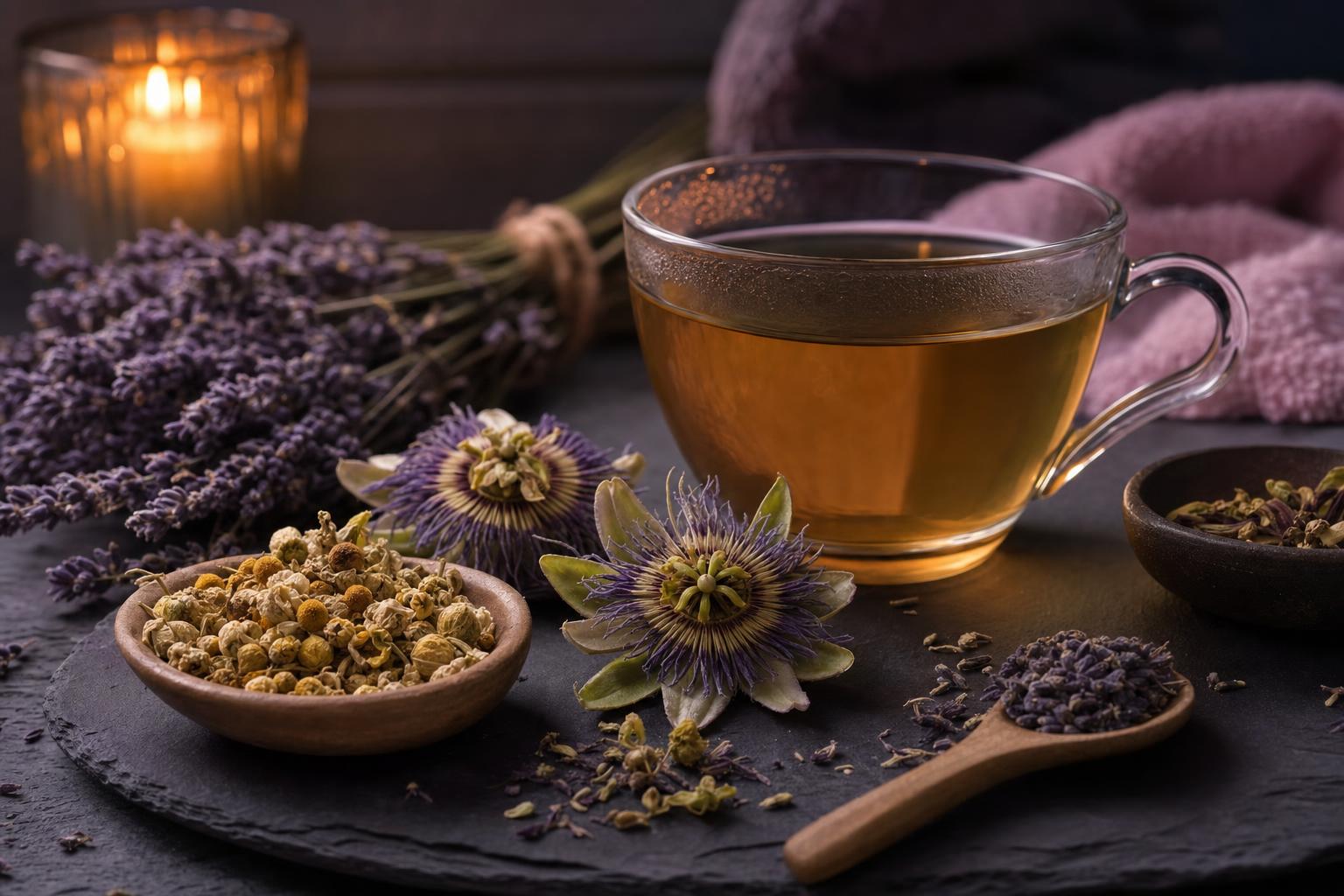
Fastest useful choice
If you only try one thing: passionflower tea or L-theanine
For racing thoughts at bedtime, L-theanine 100–200 mg is the fastest useful choice — effects within 30–60 minutes, no sedation, no dependency. For a gentler route, passionflower tea is one of the most reliable calming bedtime options with mild evidence. Pair either with dim light, no screens, and a consistent bedtime — the routine is what makes the herb land. See the full L-theanine guide and the ashwagandha guide for the deeper evidence reviews.
Quick answer
For racing thoughts at bedtime, start with L-theanine (100–200 mg) or a cup of passionflower tea. For the “wired but tired” pattern driven by stress hormones, take ashwagandha in the evening and give it a few weeks. For mild restlessness, lemon balm and magnolia bark are gentle traditional options, with valerian reserved for short courses. Pair any of these with dim light, a screen curfew and a steady bedtime — the herb is the smaller lever.
Key takeaways
- • Identify the pattern first: racing mind, physical tension, or stress-hormone “wired but tired.” Each responds to a different herb.
- • Fast vs foundational: L-theanine, passionflower and lemon balm work the same night; ashwagandha works on the cause over weeks.
- • Gentle before strong: begin with the lowest-risk options before reaching for sedating herbs like valerian.
- • Routine multiplies the effect: dim light, no late caffeine and a consistent bedtime make every herb work better.
- • Persistent nighttime anxiety that disrupts daily life deserves a clinician’s input, not just supplements.
Match to your pattern
Choose by how anxiety shows up at night
If it shows up as
Racing thoughts you cannot switch off
Start with
L-theanine, then passionflower →
If it shows up as
"Wired but tired" — stress hormones high
Start with
Ashwagandha in the evening →
If it shows up as
Restless, tense, mild worry
Start with
Lemon balm or magnolia bark →
If it shows up as
Anxiety plus trouble staying asleep
Start with
Passionflower + magnesium →
If it shows up as
Occasional, situational restlessness
Start with
Valerian (short course) →
If it shows up as
Stress carried over from the whole day
Start with
Magnesium glycinate base →
Evidence overview
The calming herbs worth knowing
Passionflower
Passionflower raises GABA activity and has small but encouraging trials for anxiety and restless sleep. It is one of the gentlest ways to take the edge off bedtime worry, used as a tea or extract. A practical first choice when the issue is anxiety rather than deep tiredness. See the dedicated passionflower guide.
Lemon balm (Melissa)
A mild, pleasant calming herb with traditional and some clinical support for reducing stress and improving calm, especially when combined with valerian. Good for low-grade evening tension and easy to take as a tea before bed.
Ashwagandha Best for “wired but tired”
The most clinically studied adaptogen for stress. By moderating the HPA axis and lowering cortisol, evening ashwagandha targets the root of stress-driven wakefulness rather than just sedating you. Allow 2–6 weeks of consistent use. Learn how it compares in rhodiola vs ashwagandha and our how to lower cortisol naturally guide.
Magnolia bark & valerian
Magnolia’s honokiol acts on GABA receptors and is used traditionally for evening tension. Valerian is more sedating and better evidenced for sleep onset, but results vary by extract and it is best in short courses. Keep either away from alcohol and other sedatives.
L-theanine Fastest for racing thoughts
Not a herb but the most reliable fast-acting option for mental noise: 100–200 mg quiets stress-driven arousal within an hour without sedation, and it stacks cleanly with magnesium or passionflower. See L-theanine vs magnesium.
A simple evening wind-down
- Set a caffeine curfew — nothing after early afternoon if evenings are when anxiety peaks.
- Dim lights and reduce screens 60–90 minutes before bed to let melatonin rise naturally.
- Take your chosen calming herb or L-theanine 30–60 minutes before bed.
- Offload the racing mind: a two-minute “brain dump” on paper beats fighting it lying down.
- Keep a consistent bedtime — a steady schedule is the most powerful anti-anxiety lever you have.
Risks & safety
- • Do not combine sedating herbs (valerian, passionflower, magnolia) with alcohol, benzodiazepines, sleep medication, or opioids — additive CNS depression is a real safety risk.
- • Ashwagandha: avoid in pregnancy and breastfeeding; rare hepatotoxicity reported; caution with thyroid conditions, autoimmune disease, and immunosuppressants.
- • Valerian: avoid in pregnancy; do not combine with sedatives; short courses only.
- • Passionflower: avoid in pregnancy (uterotonic activity in animal models); do not combine with prescription sedatives.
- • Lemon balm: caution with sedatives and thyroid medications.
- • Herbs are educational support, not a treatment for diagnosed anxiety disorders, panic disorder, PTSD, or OCD.
- • If nighttime anxiety is frequent, intense, or paired with low mood, panic, or suicidal thoughts, contact a clinician — this is a mental health concern that supplements cannot address.
References
Affiliate-ready sourcing
Product recommendations
Use these as sourcing starting points, not medical recommendations. Product quality, dose, and fit still need review.
Affiliate disclosure: we may earn a commission from qualifying links at no extra cost to you. How we stay independent.
Frequently asked questions
Which herb is best for nighttime anxiety?
For most people, passionflower and lemon balm are the gentlest reliable starting points for evening anxiety, because they raise calming GABA tone without strong sedation. If the anxiety is clearly stress-hormone driven — the "wired but tired" pattern — ashwagandha taken in the evening addresses the cause rather than just the symptom. L-theanine is the fastest-acting option for racing thoughts at bedtime.
Can I take calming herbs every night?
Gentle options like lemon balm, passionflower and L-theanine are generally well tolerated for regular evening use. Ashwagandha is designed for daily use over weeks. Sedating herbs such as valerian are better used in shorter courses. If you feel you cannot fall asleep at all without a herbal aid for more than a few weeks, treat that as a prompt to look at the underlying stress, schedule or a possible anxiety disorder with a clinician.
Are calming herbs safe with anxiety medication?
Not automatically. Sedating and GABA-active herbs can add to the effects of benzodiazepines, sleep medications and alcohol, and some adaptogens may interact with other drugs. If you take any prescription medication for anxiety, sleep or mood, check with a pharmacist or clinician before adding herbs rather than assuming "natural" means compatible.
How fast do nighttime calming herbs work?
L-theanine and passionflower tea can take the edge off within 30–60 minutes. Lemon balm is similar. Ashwagandha works on the stress system over 2–6 weeks and is not a same-night fix. Valerian is variable and tends to perform better after a week or two of consistent use.
Free safety checklist
Get the evidence-first supplement notes
Occasional research updates, practical safety context, and new guide announcements. No diagnosis, treatment, or personal medical advice.
We use your email to send the checklist and occasional evidence-first supplement updates. Unsubscribe anytime. Privacy policy.