NAC & Glutathione: One Biochemical System, Several Different Clinical Questions
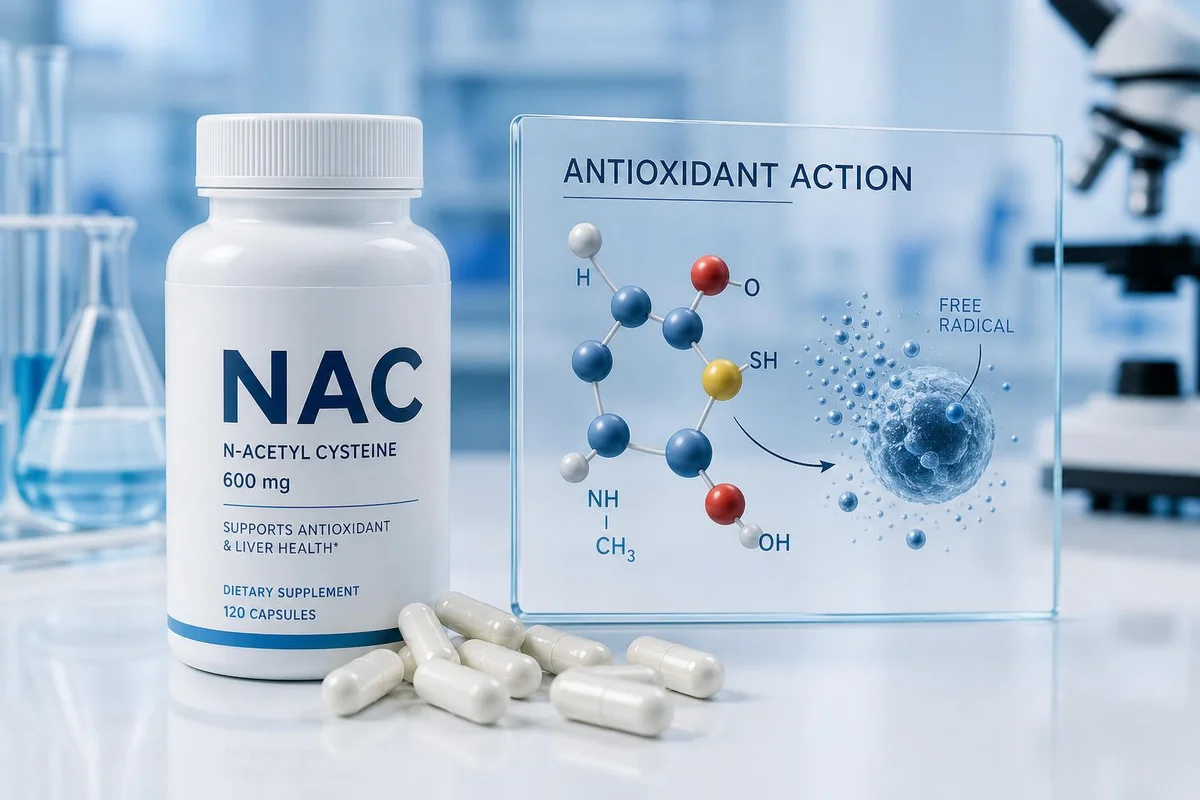
N-acetylcysteine (NAC) can supply cysteine for glutathione synthesis, and glutathione is a major intracellular redox molecule. That biology is real. The mistake is turning it into one blanket consumer conclusion. Hospital antidote use, respiratory-disease trials, psychiatric studies, oral glutathione pharmacology, and vague “detox” claims are different evidence lanes.
A biomarker pathway does not create one universal supplement indication.
Do not treat NAC as a general-purpose detox protocol. Its clearest medical use is prescription acetylcysteine for potentially hepatotoxic acetaminophen overdose under monitored care [1]. Respiratory evidence is mixed across meta-analyses [2,3], psychiatric trials are condition-specific [4], and oral glutathione can increase glutathione stores in humans rather than being categorically “destroyed in the gut” [5]. None of those findings proves that a healthy person should take NAC or glutathione every day for detox, anti-aging, liver cleansing, or hangover prevention.
NAC and glutathione evidence by indication, what was studied, and the main limitation
Question
What is supported
Main limitation
What not to infer
Acetaminophen overdose
Prescription acetylcysteine is an antidote used to prevent or lessen hepatic injury after potentially hepatotoxic exposure [1].
This is monitored toxicology care with specific treatment algorithms.
It does not establish a daily liver-protection supplement protocol.
COPD / chronic bronchitis
Some meta-analyses report fewer exacerbations and symptom/QoL signals [2].
Other meta-analyses find no significant improvement in several COPD outcomes [3].
Do not convert one pooled estimate into a universal dose or NNT.
Trichotillomania / psychiatric research
An adult randomized trial found a condition-specific signal for trichotillomania [4].
Psychiatric evidence varies by diagnosis, trial, co-treatment, and population.
A positive adjunct trial is not a self-treatment recipe for OCD-spectrum conditions.
Oral glutathione
A six-month randomized trial found increases in glutathione stores in multiple compartments [5].
Biomarker change does not automatically equal a clinically important outcome.
It is inaccurate to say oral glutathione is simply useless or completely destroyed.
General detox / wellness
Glutathione has important endogenous redox and detoxification roles [6].
A physiologic pathway is not a validated supplement indication.
Do not inherit evidence from poisoning, COPD, or psychiatric trials.
Why “NAC raises glutathione” is not the end of the evidence chain
NAC can provide cysteine, a substrate relevant to glutathione synthesis [6]. That supports mechanism. It does not tell us whether supplementation improves a particular symptom, disease outcome, lifespan endpoint, or nonspecific feeling of “detox.” Each clinical claim needs its own human evidence.
Safety boundary
Do not use supplement logic to manage poisoning or replace treatment
Suspected acetaminophen overdose is time-sensitive medical care, not a supplement experiment. Likewise, COPD, psychiatric symptoms, pregnancy, asthma, significant liver or kidney disease, and medication use can materially change the risk/benefit question. A product sold as NAC is not interchangeable with a hospital acetylcysteine protocol [1].
Bottom line
NAC and glutathione are biologically connected, but the evidence does not support one universal “NAC is better” or “glutathione is useless” rule. Use indication-specific evidence: prescription toxicology is one lane, respiratory trials another, psychiatric research another, and oral glutathione biomarker studies another. General detox and wellness claims require evidence of their own.
Frequently asked questions
Is NAC a general detox supplement?
No. NAC has important indication-specific uses, including prescription use for acetaminophen poisoning and research in respiratory and psychiatric conditions. Those data do not establish a routine daily NAC protocol for general detox, liver cleansing, hangovers, or wellness.
Is oral glutathione useless because it is broken down in the gut?
That claim is too categorical. A six-month randomized trial found oral glutathione increased glutathione stores in several tissues and blood compartments. Formulation can affect pharmacokinetics, but higher glutathione levels do not automatically prove a clinical benefit for a disease or wellness goal.
Does NAC reduce COPD exacerbations?
The evidence is mixed. A 2024 meta-analysis reported fewer exacerbations in COPD and chronic bronchitis/pre-COPD, while another modern meta-analysis found no significant benefit across several COPD outcomes. The result depends on population, regimen, background treatment, and study selection.
Does NAC treat OCD or trichotillomania?
NAC has been studied as an adjunct in psychiatric research, but results are condition-specific and should not be converted into a self-treatment protocol. The adult trichotillomania randomized trial is Grant et al. 2009 (PMID 19581567).
Is NAC the same thing as hospital treatment for acetaminophen overdose?
No. Intravenous acetylcysteine is a prescription antidote used with laboratory monitoring and poison-control or hospital protocols after potentially hepatotoxic acetaminophen exposure. That indication does not imply that routine oral NAC supplementation prevents liver injury in healthy people.
Papi A, et al. (2024). N-acetylcysteine Treatment in COPD and Chronic Bronchitis/Pre-COPD: Distinct Meta-analyses. Arch Bronconeumol. PMID 38555190. PubMed →
Huang C, et al. (2023). The efficacy of N-acetylcysteine in chronic obstructive pulmonary disease patients: a meta-analysis. Ther Adv Respir Dis. PMID 36927162. PubMed →
Grant JE, et al. (2009). N-acetylcysteine, a glutamate modulator, in the treatment of trichotillomania: a double-blind, placebo-controlled study. Arch Gen Psychiatry. PMID 19581567. PubMed →
Richie JP Jr, et al. (2015). Randomized controlled trial of oral glutathione supplementation on body stores of glutathione. Eur J Nutr. PMID 24791752. PubMed →
Forman HJ, Zhang H, Rinna A. (2009). Glutathione: overview of its protective roles, measurement, and biosynthesis. Mol Aspects Med. PMID 18796312. PubMed →
Sourcing options
NAC sourcing examples
Product links are sourcing examples, not a treatment, detox, or dosing recommendation. Match any use to the specific evidence and your medication/health context.
As an Amazon Associate I earn from qualifying purchases. We may earn a commission from qualifying links at no extra cost to you. How we stay independent.
Swipe to compare →
Budget example
NOW Foods
NOW NAC 600 mg + selenium
NAC 600 mg plus selenium, not single ingredient. Study doses vary by indication. FDA August 2022 final guidance describes conditional enforcement discretion for certain NAC dietary supplements; it does not itself confer general supplement approval.
Selection criteria
• NAC 600 mg plus selenium, not single ingredient. Study doses vary by indication. FDA August 2022 final guidance describes conditional enforcement discretion for certain NAC dietary supplements; it does not itself confer general supplement approval.