Mushroom Coffee Benefits: What the Science Actually Says
What the evidence actually shows
Direct answer
An evidence-based review of mushroom coffee benefits, caffeine, lion's mane, cordyceps, reishi and chaga — including human evidence, safety, dose limitations and how to read a product label. Mushroom coffee is a functional beverage category, not one standardized intervention; formulas can differ substantially in caffeine content, mushroom species, extract form, and disclosed amounts. The most predictable immediate alertness effect comes from coffee and caffeine when caffeine is present, not from assuming an acute nootropic effect from the mushroom blend. Lion's mane has the most developed human cognition evidence among common mushroom-coffee ingredients, but the evidence remains small, mixed, preparation-specific, and cannot be transferred automatically to every beverage.
Research brief
Questions this page answers
- What are the evidence-based benefits of mushroom coffee?
- Is mushroom coffee actually good for you?
- Is mushroom coffee a scam or does it have real evidence?
- Does mushroom coffee improve focus or cognition?
- Is lion's mane coffee proven to improve memory?
- Is mushroom coffee healthier than regular coffee?
- Does mushroom coffee contain less caffeine than regular coffee?
- What should a mushroom coffee label disclose?
- What are the main side effects and safety concerns with mushroom coffee?
Signal
Scientific takeaways
- Mushroom coffee is a functional beverage category, not one standardized intervention; formulas can differ substantially in caffeine content, mushroom species, extract form, and disclosed amounts.
- The most predictable immediate alertness effect comes from coffee and caffeine when caffeine is present, not from assuming an acute nootropic effect from the mushroom blend.
- Lion's mane has the most developed human cognition evidence among common mushroom-coffee ingredients, but the evidence remains small, mixed, preparation-specific, and cannot be transferred automatically to every beverage.
- Direct clinical evidence on finished commercial mushroom-coffee blends is sparse, so ingredient studies do not establish that a particular beverage delivers the same benefit.
- Safety depends on the actual formula and person: caffeine exposure, allergies, medication interactions, product quality, and heavy chaga-related oxalate risk can matter.
Evidence verdict: Mushroom coffee is a plausible functional beverage, not a proven therapy. Its most predictable immediate effects usually come from coffee and caffeine. Individual mushrooms — especially lion's mane — have interesting early human evidence, but direct research on the finished mushroom-coffee beverage itself remains sparse. Product formulas vary enough that results from a standardized mushroom extract cannot automatically be transferred to every coffee blend.
The short answer
Mushroom coffee combines coffee — or, in some products, a coffee-like base — with extracts or powders from fungi such as lion's mane (Hericium erinaceus), cordyceps, reishi (Ganoderma lucidum), and chaga (Inonotus obliquus).
There are three questions that marketing often blends together:
- Does coffee have biological effects? Yes. Caffeine reliably affects alertness, and coffee consumption has a large research literature.
- Do individual functional mushrooms have biological effects? Probably, but the strength of human evidence varies substantially by species, preparation, dose and outcome.
- Has mushroom coffee itself been shown to deliver all of those benefits? Not convincingly. Direct clinical evidence on commercial mushroom-coffee blends remains limited.
That distinction is the key to evaluating mushroom coffee without either dismissing it or overselling it.
At a glance
This table scrolls horizontally on small screens. Use Tab to focus the table region, then scroll with arrow keys or touch.
| Question | Evidence-based answer |
|---|---|
| Can it improve alertness? | Likely, if it contains caffeine. This is primarily a coffee/caffeine effect. |
| Can it support cognition? | Possible, but preliminary. Lion's mane has the most interesting human evidence among common mushroom-coffee ingredients, but results are mixed and cannot simply be extrapolated to every blend. [1–3, 10–11] |
| Does it boost immunity? | Unproven as a clinical outcome for mushroom coffee. Mushroom beta-glucans and other compounds are biologically interesting, but broad “immune boosting” language outruns beverage-level evidence. |
| Does it reduce stress? | Uncertain. Reishi and lion's mane have been studied for fatigue, mood or stress-related outcomes, but robust evidence that mushroom coffee meaningfully reduces stress in healthy adults is lacking. [5, 9, 11] |
| Can it improve exercise performance? | Mixed/limited. Cordyceps preparations have been studied in controlled human trials, but this does not establish an ergogenic effect for ordinary mushroom coffee. [6] |
| Is it healthier than regular coffee? | Not established. A lower-caffeine blend may suit some people, but regular coffee already has a substantial evidence base. [7] |
| Is it safe? | Often tolerated, but not risk-free. Caffeine, allergies, medication interactions, product quality and kidney concerns with heavy chaga use all matter. [12–13] |
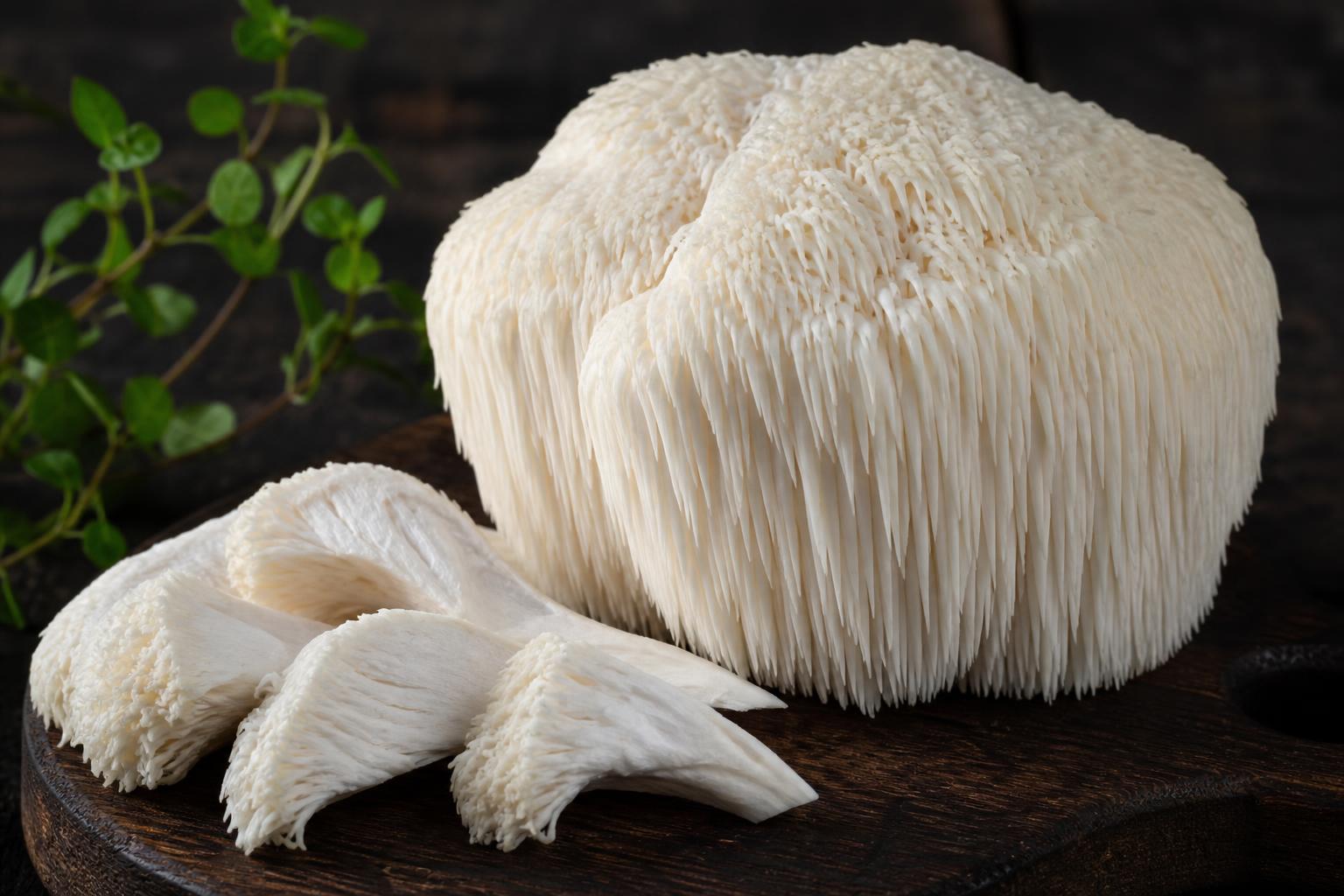
What counts as “mushroom coffee”?
There is no single standardized mushroom-coffee formula. One product may contain instant coffee plus a small proprietary mushroom blend; another may use concentrated extracts with disclosed amounts; another may include cacao, tea, sweeteners or additional herbs.
That makes the label part of the evidence. Two products carrying the same “mushroom coffee” name can deliver very different amounts of caffeine and mushroom material.
A useful rule: evaluate the actual formula, not the category name.
What mushroom coffee can realistically do
For most people, the most defensible expectation is modest. Mushroom coffee may:
- provide the familiar effects of coffee when caffeine is present,
- add bioactive mushroom compounds in amounts that may or may not resemble studied preparations,
- reduce total caffeine if the blend contains less coffee than your usual cup,
- and offer a convenient way to consume mushroom ingredients if you prefer beverages to capsules.
What it should not be expected to do is function as a proven treatment for memory loss, anxiety, immune dysfunction, fatigue, metabolic disease or other medical conditions.
Benefit #1: Alertness and focus — the strongest immediate case
If a mushroom coffee contains caffeine, an acute increase in alertness is unsurprising. That benefit should not automatically be attributed to lion's mane, cordyceps or an “adaptogenic” effect.
Some mushroom coffees contain less caffeine than a conventional serving of coffee because part of the formula is replaced by mushroom extract or other ingredients. For caffeine-sensitive people, a lower-caffeine product may mean fewer jitters or less interference with sleep — but caffeine content varies by brand, so the number on the label matters more than the words mushroom coffee.
Evidence confidence: High for caffeine-related alertness; low for claiming the mushroom blend itself causes an immediate focus effect.
Benefit #2: Lion's mane and cognition — promising, not settled
Lion's mane is the most compelling reason to take the cognitive claims around mushroom coffee seriously — with important caveats.
A 2025 systematic review identified randomized controlled trials and other human studies of Hericium erinaceus. Some reported favorable cognitive findings, but the literature remains relatively small and heterogeneous. [1]
A broader 2024 review of mushrooms, mood and neurocognition found that intervention results were mixed, although lion's mane showed some signals of cognitive and mood benefit, particularly in middle-aged and older adults. [2]
One frequently cited 2009 double-blind placebo-controlled trial reported cognitive improvement in adults with mild cognitive impairment during lion's mane intake. [3] But newer healthy-adult research shows why the evidence should not be summarized as uniformly positive.
A 2025 randomized crossover trial of a standardized lion's mane fruiting-body extract found no significant improvement in composite measures of global cognition or mood, although one individual motor-performance test improved. [10] A separate 2023 pilot trial in 41 healthy adults found a faster Stroop response after an acute dose and a near-significant trend toward lower subjective stress after 28 days, while also reporting several null findings. [11]
Mechanistic work has explored lion's mane compounds in relation to nerve-growth-factor signaling, but cell experiments are mechanistic evidence — not proof of a clinical benefit in people. [4]
What this means for your cup
The central limitation is formulation equivalence. A trial of a particular lion's mane preparation at a defined dose does not prove that a commercial coffee containing an unspecified or smaller amount will reproduce the effect.
The newer healthy-adult trials also suggest that any benefit may be small, task-specific or absent rather than a broad nootropic effect.
Evidence confidence: Low-to-moderate for specific lion's mane preparations and selected cognitive outcomes; low for mushroom coffee as a category.
Benefit #3: Cordyceps and energy/endurance — interesting but inconsistent
Cordyceps is commonly positioned as the “energy” mushroom. This is easy to misread: it does not mean cordyceps is simply another stimulant like caffeine.
Human trials have investigated cordyceps preparations for exercise-related outcomes. A double-blind placebo-controlled study in healthy older adults, for example, evaluated a Cordyceps sinensis preparation and exercise performance. [6] The wider literature is not consistent enough to assume that any dose of cordyceps in coffee will noticeably improve endurance.
If you feel an immediate energy increase after a caffeinated cordyceps coffee, caffeine is the more established explanation.
Evidence confidence: Low for a meaningful exercise-performance benefit from typical mushroom coffee.
Benefit #4: Reishi and stress/fatigue — limited clinical translation
Reishi has a long history of traditional use and contains polysaccharides and triterpenes that have attracted pharmacological research.
One randomized, double-blind, placebo-controlled study evaluated a Ganoderma lucidum polysaccharide extract in people with neurasthenia and reported changes in fatigue/well-being measures. [5] That is worth noting, but it is not equivalent to showing that reishi coffee reduces everyday stress in healthy consumers.
A 2025 systematic review and meta-analysis evaluated 17 randomized controlled trials involving 971 participants. Some outcomes changed statistically, but the authors rated the certainty of evidence very low across all outcomes. [9]
That makes sweeping reishi claims difficult to justify. Population, preparation, dose, duration and outcome all matter — and none of this directly proves that a typical reishi-containing coffee produces a noticeable calming effect.
Evidence confidence: Low for stress reduction from mushroom coffee; very uncertain for broad systemic health claims from reishi.
Benefit #5: Chaga and antioxidants — strong chemistry, weak outcome evidence
Chaga contains polyphenols and other compounds with antioxidant activity, and laboratory research has isolated antioxidant constituents from Inonotus obliquus. [8]
But “contains antioxidants” and “produces a meaningful health benefit when consumed in coffee” are not the same claim. Antioxidant assays performed in a laboratory do not establish that a beverage prevents disease or produces a measurable clinical effect.
This is a classic place where wellness marketing can jump several steps beyond the evidence.
Evidence confidence: High that chaga contains bioactive compounds; low for specific clinical benefits from chaga coffee.
What about regular coffee itself?
This comparison is often missing from mushroom-coffee marketing.
Coffee is not an inert delivery vehicle waiting for mushrooms to make it healthy. An umbrella review published in The BMJ synthesized meta-analyses across numerous health outcomes and found that coffee consumption was more often associated with benefit than harm across the exposures studied, while emphasizing that much of the long-term evidence is observational. [7]
So the relevant question is not simply “Is mushroom coffee healthy?” It is:
Does adding these mushroom ingredients provide a meaningful advantage over the coffee you would otherwise drink?
For most claimed outcomes, we do not yet have enough direct comparative evidence to answer yes.
The dose problem: why milligrams alone can mislead
It is tempting to compare a mushroom coffee's milligram number with the gram-level amounts used in a trial. That can be useful as a rough screening tool, but it can also be misleading.
Mushroom preparations are not interchangeable. A label might describe:
- whole fruiting-body powder,
- a concentrated extract,
- mycelium,
- myceliated grain,
- or a standardized extract with a specified beta-glucan content.
A smaller amount of a concentrated extract is not necessarily equivalent to the same weight of raw powder. Likewise, “10:1 extract” does not by itself prove potency, bioavailability or clinical equivalence.
Better questions than “How many milligrams?”
This table scrolls horizontally on small screens. Use Tab to focus the table region, then scroll with arrow keys or touch.
| Label question | Why it matters |
|---|---|
| Which species is used? | Different fungi have different constituents and evidence bases. |
| Fruiting body, mycelium, or both? | The chemical profile can differ substantially. |
| Powder or extract? | Weight alone cannot compare them reliably. |
| How much per serving? | Undisclosed proprietary blends make evidence-based comparison difficult. |
| Is beta-glucan content reported? | More informative than a generic “polysaccharide” claim for many mushroom extracts. |
| Is there credible contaminant testing? | A certificate of analysis is more useful than vague “lab tested” language. |
| How much caffeine? | This may explain more of the immediate subjective effect than the mushrooms do. |
The evidence-matching test
When a brand cites a study, ask whether the product matches the study on four points:
- same species,
- same part or preparation,
- roughly comparable daily exposure,
- same outcome and population.
If several of those are missing, “clinically studied ingredient” is much weaker than it sounds.
Safety and side effects: who should be more cautious?
For many healthy adults, a modest serving of a reputable mushroom-coffee product may be tolerated. That does not make every formula appropriate for everyone.
Caffeine still counts
Mushroom coffee can still cause the familiar adverse effects of caffeine: jitteriness, anxiety, palpitations, gastrointestinal discomfort and sleep disruption. Do not assume “functional” means caffeine-free.
Mushroom allergy is possible
Edible and medicinal fungi can cause allergic reactions in susceptible people. Stop using a product and seek appropriate care for signs of a serious allergic reaction.
Chaga deserves special kidney caution
Chaga can contain substantial oxalate. Published case reports have linked heavy or prolonged chaga-powder intake with oxalate nephropathy and serious kidney injury. [12–13] These reports do not show that an ordinary serving of every chaga-containing coffee is dangerous, but they are enough to reject the idea that unlimited chaga exposure is automatically benign.
People with kidney disease, a history of calcium-oxalate stones, or a medically prescribed low-oxalate diet should be especially cautious about concentrated chaga products.
Medications and medical conditions matter
Functional mushrooms contain biologically active compounds. If you take anticoagulant/antiplatelet medication, glucose-lowering medication, immunosuppressive therapy, or have a significant medical condition, it is sensible to review the specific ingredients with a pharmacist or clinician rather than treating the blend as ordinary coffee.
Pregnancy and breastfeeding are also areas where safety data for concentrated medicinal-mushroom extracts are inadequate.
How to choose a better mushroom coffee
A premium-looking package tells you almost nothing about evidence quality. Prefer products that make the formula auditable.
Green flags
- Exact mushroom species are named.
- Amounts per serving are disclosed.
- The label distinguishes powder from extract.
- Fruiting body/mycelium source is clear.
- Beta-glucan content is reported when relevant.
- Caffeine per serving is disclosed.
- A recent, lot-specific certificate of analysis is available for contaminants such as heavy metals and microbes.
- Claims are modest rather than disease-oriented.
Red flags
- A large proprietary “mushroom complex” with no individual amounts.
- “Clinically proven” without identifying the exact product trial.
- Claims to treat, prevent or cure disease.
- Vague “polysaccharides” used as the only potency metric.
- No meaningful testing documentation.
- Huge claims built primarily on cell or animal studies.
The five-second label test
A strong product should let you answer five questions quickly: which mushroom, what preparation, how much, how much caffeine, and what testing? If the label cannot answer those, evidence-based comparison becomes much harder.
Mushroom coffee vs. regular coffee vs. a standalone extract
This table scrolls horizontally on small screens. Use Tab to focus the table region, then scroll with arrow keys or touch.
| Mushroom coffee | Regular coffee | Standalone mushroom extract | |
|---|---|---|---|
| Immediate alertness | Yes, if caffeinated | Yes, if caffeinated | Usually no caffeine unless added |
| Formula transparency | Highly variable | Usually straightforward | Highly variable |
| Ability to match a studied mushroom preparation | Often difficult | Not applicable | Potentially easier |
| Convenience | Excellent | Excellent | Good |
| Evidence for the finished product | Limited | Large coffee literature | Depends on exact extract/species |
| Best reason to choose it | You enjoy it and want coffee + mushroom ingredients in one routine | You mainly want coffee/caffeine | You want a specific mushroom without tying it to coffee |
So, is mushroom coffee worth it?
It can be — but not because the marketing has proved all of its claims.
Mushroom coffee makes the most sense when:
- you genuinely like the taste,
- the caffeine level suits you,
- the manufacturer clearly discloses what is in it,
- the price premium is acceptable,
- and you view the mushroom component as promising but not guaranteed.
It makes less sense if you are buying it specifically to treat brain fog, anxiety, immune problems, fatigue or another medical concern. Current evidence does not justify treating mushroom coffee as a therapy for those conditions.
The Hippie Scientist verdict
Promising ingredients, under-studied beverage. Lion's mane has the strongest emerging cognitive case among mushrooms commonly used in these blends, while cordyceps, reishi and chaga each have biologically interesting research. But direct evidence for commercial mushroom coffee remains thin. Buy on transparent formulation, caffeine level, testing and taste — not on a stack of health promises.
Frequently asked questions
Does mushroom coffee actually work?
It depends on what “work” means. A caffeinated product can predictably increase alertness. Some individual mushroom preparations have preliminary human evidence for particular outcomes, but there is not strong evidence that mushroom coffee as a category delivers the broad set of benefits often advertised.
Is mushroom coffee better for you than regular coffee?
Not proven. A lower-caffeine blend may suit someone who wants to reduce caffeine, but regular coffee already has a substantial research base. There are not enough direct head-to-head trials to say mushroom coffee is generally healthier. [7]
Does mushroom coffee have caffeine?
Many products do because they contain real coffee, but the amount varies. Some are low-caffeine or caffeine-free. Check the product's stated caffeine per serving rather than assuming.
Does mushroom coffee help you lose weight?
There is not good clinical evidence that mushroom coffee itself produces meaningful weight loss. Products making strong weight-loss claims deserve skepticism.
Does mushroom coffee help with brain fog?
Lion's mane research provides a plausible reason for further study of cognition, but “brain fog” is nonspecific and mushroom coffee has not been established as a treatment for it. [1–3, 10–11]
Is mushroom coffee good for your gut?
That is plausible in theory for some ingredients, but direct human evidence showing that mushroom coffee meaningfully improves gut health is not established. Claims about the microbiome should be evaluated against the exact formula rather than assumed from the word “mushroom.”
Can you drink mushroom coffee every day?
Many people may tolerate daily use, but safety depends on caffeine intake, the mushrooms and doses used, medications, medical conditions and product quality. More is not automatically better — especially with concentrated chaga or multi-ingredient blends.
Does mushroom coffee taste like mushrooms?
Usually not strongly. Many blends taste primarily like coffee with an earthy or roasted note, but flavor varies considerably by formula.
Evidence notes & references
How we grade claims: We prioritize systematic reviews and controlled human trials over observational, animal, cell and mechanistic evidence. Evidence on a standalone mushroom preparation is not treated as direct proof for a finished mushroom-coffee product.
- Menon A, et al. Benefits, side effects, and uses of Hericium erinaceus as a supplement: a systematic review. Front Nutr. 2025;12:1641246. PMID: 40959699. DOI: 10.3389/fnut.2025.1641246.
- Docherty S, et al. A review of the effects of mushrooms on mood and neurocognitive health across the lifespan. Neurosci Biobehav Rev. 2024;158:105548. PMID: 38246232. DOI: 10.1016/j.neubiorev.2024.105548.
- Mori K, et al. Improving effects of the mushroom Yamabushitake (Hericium erinaceus) on mild cognitive impairment: a double-blind placebo-controlled clinical trial. Phytother Res. 2009. PMID: 18844328.
- Mori K, et al. Nerve growth factor-inducing activity of Hericium erinaceus in 1321N1 human astrocytoma cells. Biol Pharm Bull. 2008. PMID: 18758067.
- Tang W, et al. A randomized, double-blind and placebo-controlled study of a Ganoderma lucidum polysaccharide extract in neurasthenia. J Med Food. 2005. PMID: 15857210.
- Chen S, et al. Effect of Cs-4 (Cordyceps sinensis) on exercise performance in healthy older subjects: a double-blind, placebo-controlled trial. J Altern Complement Med. 2010. PMID: 20804368.
- Poole R, et al. Coffee consumption and health: umbrella review of meta-analyses of multiple health outcomes. BMJ. 2017;359:j5024. DOI: 10.1136/bmj.j5024.
- Lee IK, et al. New antioxidant polyphenols from the medicinal mushroom Inonotus obliquus. Bioorg Med Chem Lett. 2007. PMID: 17980585.
- Jafari A, et al. The Nutritional Significance of Ganoderma lucidum on Human Health: A GRADE-Assessed Systematic Review and Meta-Analysis of Clinical Trials. Food Sci Nutr. 2025;13(6):e70423. PMID: 40510787. DOI: 10.1002/fsn3.70423.
- Surendran S, et al. Acute effects of a standardised extract of Hericium erinaceus (Lion's Mane mushroom) on cognition and mood in healthy younger adults: a double-blind randomised placebo-controlled study. 2025. PMID: 40276537.
- Docherty S, Doughty FL, Smith EF. The Acute and Chronic Effects of Lion's Mane Mushroom Supplementation on Cognitive Function, Stress and Mood in Young Adults: A Double-Blind, Parallel Groups, Pilot Study. Nutrients. 2023;15(22):4842. PMID: 38004235. DOI: 10.3390/nu15224842.
- Kikuchi Y, et al. Chaga mushroom-induced oxalate nephropathy. Clin Nephrol. 2014;81(6):440–444. PMID: 23149251. DOI: 10.5414/CN107655.
- Kwon O, et al. Chaga mushroom-induced oxalate nephropathy that clinically manifested as nephrotic syndrome: A case report. Medicine (Baltimore). 2022;101(10):e28997. PMID: 35451393. DOI: 10.1097/MD.0000000000028997.
Related reading
- Lion's Mane: Benefits, Dosage & Evidence
- Functional Mushrooms Guide
- How to Choose a Quality Supplement
Medical note: This article is educational and is not medical advice. Supplements and functional foods can interact with medications and may not be appropriate for every health condition.
Source ledger
References
13 sources
- 01Benefits, side effects, and uses of Hericium erinaceus as a supplement: a systematic review Menon A, Jalal A, Arshad Z, Nawaz FA, Kashyap R · 2025PMID 40959699DOI 10.3389/fnut.2025.1641246 PubMed →
- 02A review of the effects of mushrooms on mood and neurocognitive health across the lifespan Docherty S, Doughty FL, Smith EF, et al. · 2024PMID 38246232DOI 10.1016/j.neubiorev.2024.105548 PubMed →
- 03Improving effects of the mushroom Yamabushitake (Hericium erinaceus) on mild cognitive impairment: a double-blind placebo-controlled clinical trial Mori K, Inatomi S, Ouchi K, Azumi Y, Tuchida T · 2009PMID 18844328 PubMed →
- 04Nerve growth factor-inducing activity of Hericium erinaceus in 1321N1 human astrocytoma cells Mori K, Obara Y, Hirota M, Azumi Y, Kinugasa S, Inatomi S, Nakahata N · 2008PMID 18758067 PubMed →
- 05A randomized, double-blind and placebo-controlled study of a Ganoderma lucidum polysaccharide extract in neurasthenia Tang W, Gao Y, Chen G, Gao H, Dai X, Ye J, Chan E, Huang M, Zhou S · 2005PMID 15857210 PubMed →
- 06Effect of Cs-4 (Cordyceps sinensis) on exercise performance in healthy older subjects: a double-blind, placebo-controlled trial Chen S, Li Z, Krochmal R, et al. · 2010PMID 20804368 PubMed →
- 07Coffee consumption and health: umbrella review of meta-analyses of multiple health outcomes Poole R, Kennedy OJ, Roderick P, Fallowfield JA, Hayes PC, Parkes J · 2017DOI 10.1136/bmj.j5024 Source →
- 08New antioxidant polyphenols from the medicinal mushroom Inonotus obliquus Lee IK, Kim YS, Jang YW, Jung JY, Yun BS · 2007PMID 17980585 PubMed →
- 09The Nutritional Significance of Ganoderma lucidum on Human Health: A GRADE-Assessed Systematic Review and Meta-Analysis of Clinical Trials Jafari A, Mardani H, Mirzaei Fashtali Z, Arghavan B · 2025PMID 40510787DOI 10.1002/fsn3.70423 PubMed →
- 10Acute effects of a standardised extract of Hericium erinaceus (Lion's Mane mushroom) on cognition and mood in healthy younger adults: a double-blind randomised placebo-controlled study Surendran S, et al. · 2025PMID 40276537 PubMed →
- 11The Acute and Chronic Effects of Lion's Mane Mushroom Supplementation on Cognitive Function, Stress and Mood in Young Adults: A Double-Blind, Parallel Groups, Pilot Study Docherty S, Doughty FL, Smith EF · 2023PMID 38004235DOI 10.3390/nu15224842 PubMed →
- 12Chaga mushroom-induced oxalate nephropathy Kikuchi Y, Seta K, Ogawa Y, et al. · 2014PMID 23149251DOI 10.5414/CN107655 PubMed →
- 13Chaga mushroom-induced oxalate nephropathy that clinically manifested as nephrotic syndrome: A case report Kwon O, Kim Y, Paek JH, et al. · 2022PMID 35451393DOI 10.1097/MD.0000000000028997 PubMed →