Natural Anxiety Relief: What the Evidence Supports in 2026
By Will
An evidence-first guide to natural anxiety and stress supplements, including ashwagandha, L-theanine, magnesium, passionflower, and kava — with current evidence limits, safety context, and decision guidance.
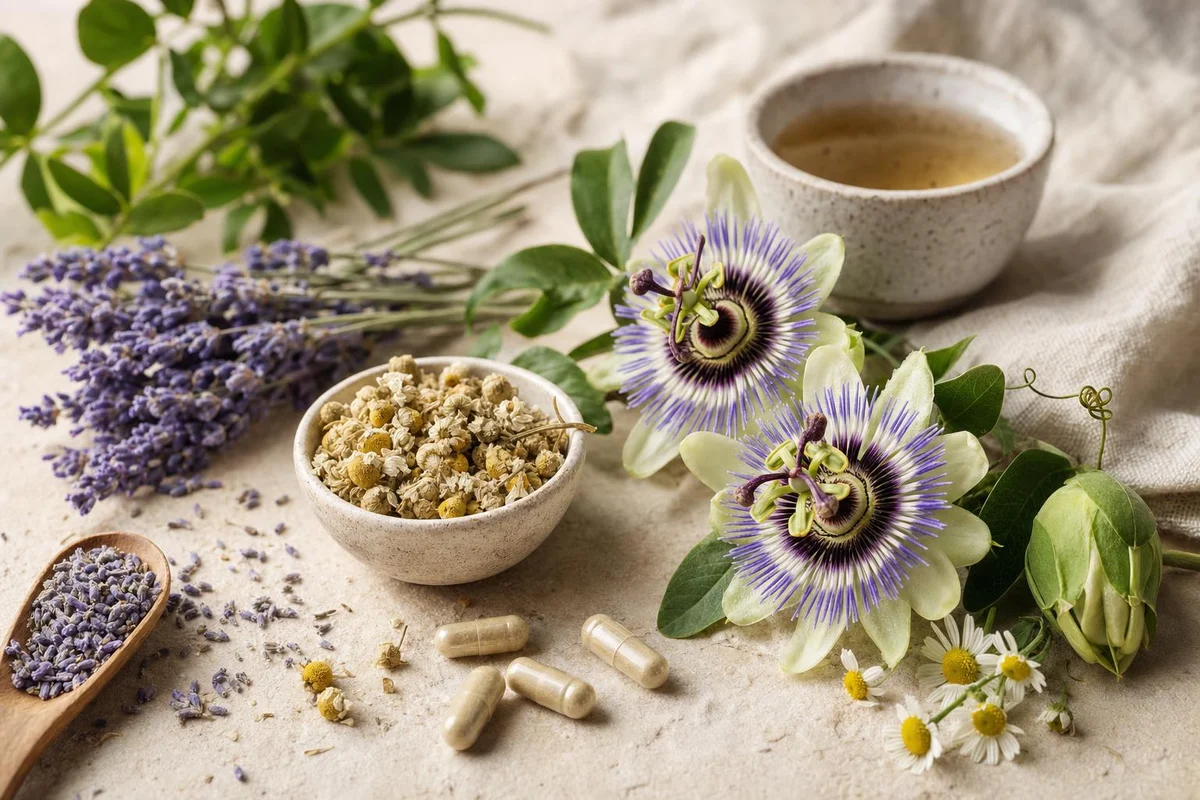
Evidence bottom line
There is no evidence-based “fastest” or universally best anxiety supplement
The biggest mistake in this category is treating stress, acute stress, racing thoughts, and an anxiety disorder as the same outcome. They are not. A supplement can change a laboratory stress measure or attention task without proving that it reliably relieves anxiety.
Recent evidence gives ashwagandha a repeated-dose stress/anxiety signal, but trials vary substantially. The July 2026 L-theanine meta-analysis found a task-specific short-term cognitive signal and modest acute-stress effect while anxiety findings remained inconsistent. Magnesium evidence is suggestive but heterogeneous; passionflower evidence is small and uncertain; and kava carries enough liver and sedative risk that it should not be treated as a casual first-line option.
Start with the question
Match the evidence to what you are actually trying to change
Ongoing stress with anxiety symptoms
Ashwagandha has repeated-dose trial data, but the evidence is not a guarantee and does not make every extract interchangeable.
Review ashwagandha evidence →Situational stress or racing thoughts
L-theanine is studied in short-term cognitive and stress paradigms, but current pooled evidence does not establish reliable acute anxiety relief.
Review L-theanine evidence →Possible low magnesium status
Magnesium is biologically important and some trials report anxiety improvements, but formulation, baseline status, and study quality make a universal anxiety claim inappropriate.
Compare magnesium forms →You prefer an herbal option
Passionflower has only a small amount of human research. Kava has more anxiety research but substantially more safety baggage, including rare serious liver injury.
Compare anxiety herbs →Human evidence
What the main options actually have behind them
These summaries intentionally separate an evidence signal from a treatment claim. Study populations, preparations, durations, and outcome scales determine how far a result can reasonably be generalized.
Evidence Snapshot
Evidence: ModerateAshwagandha — repeated-dose stress/anxiety signal
- Human evidence
- The 2024 meta-analysis included nine randomized trials and 558 participants. A representative 8-week placebo-controlled trial enrolled 60 otherwise healthy adults with elevated perceived stress and compared 125 mg or 300 mg ashwagandha root extract twice daily with placebo. Those extract-specific stress and anxiety results should not be generalized to every ashwagandha product or to diagnosed anxiety disorders.
- Research signal
- Cortisol and HPA-axis findings are biologically interesting, but biomarker changes are not interchangeable with a clinically meaningful anxiety response.
- Safety profile
- Short-term trials often report tolerability, but rare liver injury has been reported. Pregnancy, thyroid disease or thyroid medication, autoimmune disease, and sedating medications deserve extra caution.
Useful interpretation: ashwagandha is one of the more directly studied supplements for repeated stress/anxiety symptoms, but “strongest” or “best” labels hide the uncertainty between products and populations. Read the dedicated anxiety guide before treating a trial dose as a personal recommendation.
Evidence Snapshot
Evidence: LimitedL-Theanine — task-specific short-term evidence
- Human evidence
- The 2026 meta-analysis included 31 randomized trials and 1,168 participants comparing oral L-theanine with placebo across healthy and clinical populations. Its primary acute-stress analysis focused on single doses in healthy adults; 200 mg given 30–60 minutes before cognitive testing improved choice reaction time, while the acute-stress effect was modest and sensitive to study bias. Anxiety findings were inconsistent overall; the clinical anxiety signal highlighted in the review used 400 mg/day for 8 weeks in people with psychotic disorders.
- Research signal
- Neurophysiology and neurotransmitter findings can support plausibility, but they do not establish a predictable onset or clinically meaningful anxiety benefit.
- Safety profile
- Trials generally report good short-term tolerability, but interaction and long-term data are less complete than marketing often implies.
Useful interpretation: the evidence does not justify calling L-theanine the fastest natural anxiolytic, promising a 30–60 minute anxiety response, or treating combinations with other calming products as automatically low-risk. See the current L-theanine anxiety review for the population and outcome details.
Evidence Snapshot
Evidence: LimitedMagnesium — suggestive, heterogeneous evidence
- Human evidence
- The 2024 review included 15 interventional studies: seven measured anxiety and one measured both anxiety and sleep. Populations, formulations, doses, comparators, and durations varied, and some products contained additional active ingredients. A representative randomized double-blind crossover trial in 38 women compared 200 mg magnesium as magnesium oxide with placebo across two menstrual cycles and did not improve the anxiety symptom category.
- Research signal
- Magnesium is essential for normal nerve and muscle function. Biological necessity does not mean supplementation will improve anxiety in a person who is already magnesium-replete.
- Safety profile
- Supplemental magnesium can cause gastrointestinal effects and interacts with some medicines. Toxicity risk rises when kidney function is impaired.
Useful interpretation: magnesium is not a universal “first-line” anxiety supplement. Baseline intake, medical conditions, medication timing, and the amount of elemental magnesium matter more than a trendy form name.
Evidence Snapshot
Evidence: LimitedPassionflower — small and uncertain evidence base
- Human evidence
- NCCIH characterizes the evidence as small and inconclusive. In one randomized double-blind trial, 60 ambulatory-surgery patients received 500 mg oral Passiflora incarnata or placebo 90 minutes before surgery; preoperative anxiety scores were lower with passionflower, but that procedural setting does not establish ongoing treatment of an anxiety disorder.
- Research signal
- Preclinical GABA-related hypotheses are not a substitute for adequately powered human trials.
- Safety profile
- Possible drowsiness, dizziness, and confusion. NCCIH advises against use during pregnancy and notes potential concerns around anesthesia and other medicines.
Useful interpretation: passionflower is better described as an uncertain herbal option than a proven gentle anxiolytic. Product standardization and preparation also vary.
Evidence Snapshot
Evidence: LimitedKava — mixed efficacy with meaningful safety concerns
- Human evidence
- A 2020 phase III trial enrolled 171 currently non-medicated adults with diagnosed generalized anxiety disorder and compared a standardized aqueous dried-root kava extract delivering 120 mg kavalactones twice daily with placebo for 16 weeks. Kava was not significantly better than placebo on the primary anxiety outcome, and liver-test abnormalities were more frequent in the kava group.
- Research signal
- Kavalactones have pharmacologic activity, but mechanism does not resolve the conflicting efficacy findings or safety concerns.
- Safety profile
- Kava products have been linked to rare cases of serious and sometimes fatal liver injury. Kava should not be combined with alcohol or other sedating substances.
Useful interpretation: calling kava the “strongest acute herbal anxiolytic” overstates the current clinical picture. The benefit signal is mixed and the safety downside is large enough to change the decision.
Evidence traps
What not to conclude from supplement research
- A cortisol change is not automatically anxiety relief. Biomarkers can move without a meaningful change in how a person feels or functions.
- An acute lab stress task is not an anxiety disorder. Evidence from healthy volunteers under short-term stress has limited directness for clinical anxiety.
- A branded extract is not interchangeable with every product bearing the same ingredient name. Extraction, standardization, dose, and contaminants matter.
- “Natural” does not mean interaction-free. Liver, kidney, sedation, pregnancy, and medication context can completely change the risk-benefit balance.
- More supplements are not automatically better. Combining several calming products makes side effects and attribution harder to interpret.
When supplements are the wrong tool
Persistent or impairing anxiety deserves established care
Complementary approaches can be discussed alongside conventional care, but they have not been proven to treat anxiety disorders. If anxiety is persistent, worsening, triggering panic, disrupting sleep for long periods, or interfering with work, relationships, or normal daily function, professional evaluation has much higher value than cycling through supplements.
Do not stop or replace prescribed psychiatric medication with a supplement without the clinician who manages that medication. Withdrawal, relapse, and drug-supplement interactions can create risks that are larger than the supplement question itself.
Safety overview
Check before using
Before adding an anxiety or stress supplement
- Review supplements with a clinician or pharmacist when you take psychiatric, sedating, blood-pressure, thyroid, immune, liver-active, or other prescription medicines.
- Kava has rare serious liver-injury reports and should not be combined with alcohol or other sedating substances.
- Passionflower can cause drowsiness and should not be used during pregnancy; discuss it before surgery because of possible interactions with anesthesia-related medicines.
- Supplemental magnesium can cause gastrointestinal effects and can interfere with absorption of some medicines. Impaired kidney function increases toxicity risk.
- Ashwagandha deserves extra caution with pregnancy, liver disease, thyroid conditions or thyroid medication, autoimmune disease, and sedating medicines.
Primary evidence trail
Sources used for this update
These are the current reviews, randomized-trial records, and U.S. government safety resources that drive the claims above. They replace the old “references being compiled” placeholder.
- 1.Ashwagandha stress and anxiety systematic review and meta-analysis (2024) ↗
Nine randomized trials and 558 participants; pooled signal with important differences in products, populations, and outcomes.
- 2.Ashwagandha extract randomized stress trial (2020) ↗
60 otherwise healthy adults with elevated perceived stress; 125 mg or 300 mg root extract twice daily versus placebo for 8 weeks.
- 3.L-theanine randomized-trial systematic review and meta-analysis (2026) ↗
31 randomized trials and 1,168 participants across healthy and clinical populations; task-specific cognitive findings, modest acute-stress signal, inconsistent anxiety findings.
- 4.Magnesium anxiety and sleep systematic review (2024) ↗
15 interventional studies; conclusions limited by small samples, heterogeneous populations, formulations, doses, and durations.
- 5.Magnesium randomized crossover trial in premenstrual symptoms (1998) ↗
38 women; 200 mg magnesium as magnesium oxide versus placebo across two menstrual cycles; no improvement in the anxiety symptom category.
- 6.NCCIH: Passionflower usefulness and safety ↗
Small amount of human research; conclusions about anxiety are not definite; pregnancy and sedation cautions.
- 7.Passionflower preoperative-anxiety randomized trial (2008) ↗
60 ambulatory-surgery patients; 500 mg oral Passiflora incarnata versus placebo 90 minutes before surgery.
- 8.NCCIH: Kava usefulness and safety ↗
Possible anxiety benefit in some contexts, substantial uncertainty, and rare but potentially severe liver injury.
- 9.Kava for generalized anxiety disorder randomized trial (2020) ↗
171 currently non-medicated adults with generalized anxiety disorder; standardized aqueous dried-root extract delivering 120 mg kavalactones twice daily versus placebo for 16 weeks.
- 10.NIH Office of Dietary Supplements: Magnesium fact sheet ↗
Supplement safety, upper limits, kidney-risk context, and medication interactions.
Frequently asked questions
What is the best natural supplement for anxiety?
There is no evidence-based universal winner. Ashwagandha has repeated-dose human trials in stressed adults, but formulations, populations, and outcomes vary. L-theanine has short-term cognitive and stress data, while a 2026 meta-analysis found anxiety effects inconsistent overall. Magnesium evidence is suggestive but heterogeneous. Match the evidence to the outcome you care about and review safety and medication interactions before using a supplement.
What natural supplement works fastest for anxiety?
Current evidence does not establish a reliable fastest natural anxiolytic. Some supplements have been studied after single doses or over short windows, but an acute attention or stress response is not the same as demonstrated relief of anxiety. If you need rapid help for severe or escalating anxiety, supplements are not a dependable substitute for professional care.
Is L-theanine good for anxiety?
The evidence is mixed. A 2026 meta-analysis of 31 randomized trials found a short-term attention signal and a modest acute-stress effect, but anxiety effects were inconsistent and generally non-significant. That does not support calling L-theanine a reliable fast-acting anxiety treatment.
Is ashwagandha good for anxiety?
Recent meta-analyses report reductions in stress and anxiety measures across repeated-dose trials, but the studies vary in extract, dose, duration, population, and risk of bias. Ashwagandha is better treated as an option with a human evidence signal than as a guaranteed treatment, and its liver, thyroid, autoimmune, and pregnancy cautions matter.
Can I take anxiety supplements with antidepressants or other medications?
Do not assume a supplement is interaction-free. Interaction risk depends on the specific supplement, medication, dose, liver and kidney function, and other health factors. Kava has important liver and sedative cautions; magnesium can interfere with absorption of some medicines; and many herbs have incompletely characterized interaction data. Review the combination with a clinician or pharmacist before adding a supplement to psychiatric medication.
When should anxiety be treated professionally?
Seek professional evaluation when anxiety is persistent, worsening, causing panic, interfering with work or relationships, or significantly limiting daily life. Complementary approaches have not been proven to treat anxiety disorders and should not replace established care for a diagnosed or severe condition.
Sourcing options
Ashwagandha sourcing examples
Recommendation status
Product recommendations are not shown for this profile because the current site safety and monetization policy does not permit them.
Sourcing options
L-theanine sourcing examples
Recommendation status
Product recommendations are not shown for this profile because the current site safety and monetization policy does not permit them.
Free safety checklist
Get future research notes by email
Evidence-first supplement updates, safety context, and new guide announcements. No diagnosis, treatment, or personal medical advice.
We use your email to send the checklist and occasional evidence-first supplement updates. Unsubscribe anytime. Privacy policy.
Newsletter
Continue with the newsletter archive
Short notes built for cautious supplement decisions.