Evidence Review · 6 References
Adaptogens Compared: What the Human Evidence Actually Separates
“Adaptogen” groups together plants with very different chemistry and very different evidence. Ashwagandha has several small randomized stress trials; rhodiola has a signal for stress-related fatigue; evidence for holy basil, eleuthero, and schisandra is much thinner for the outcomes discussed here. The useful comparison is not “which herb matches your cortisol type?” but which outcomes were actually studied, how reliable those studies are, and what safety questions remain.
Ashwagandha
Several randomized trials report changes in perceived stress and related measures. Extracts, populations, and study quality vary.
Rhodiola
Human research is concentrated on fatigue and stress-related exhaustion. Reviews describe promising but heterogeneous evidence.
Holy basil + others
Interesting early human or traditional-use signals, but a much smaller evidence base makes confident ranking premature.
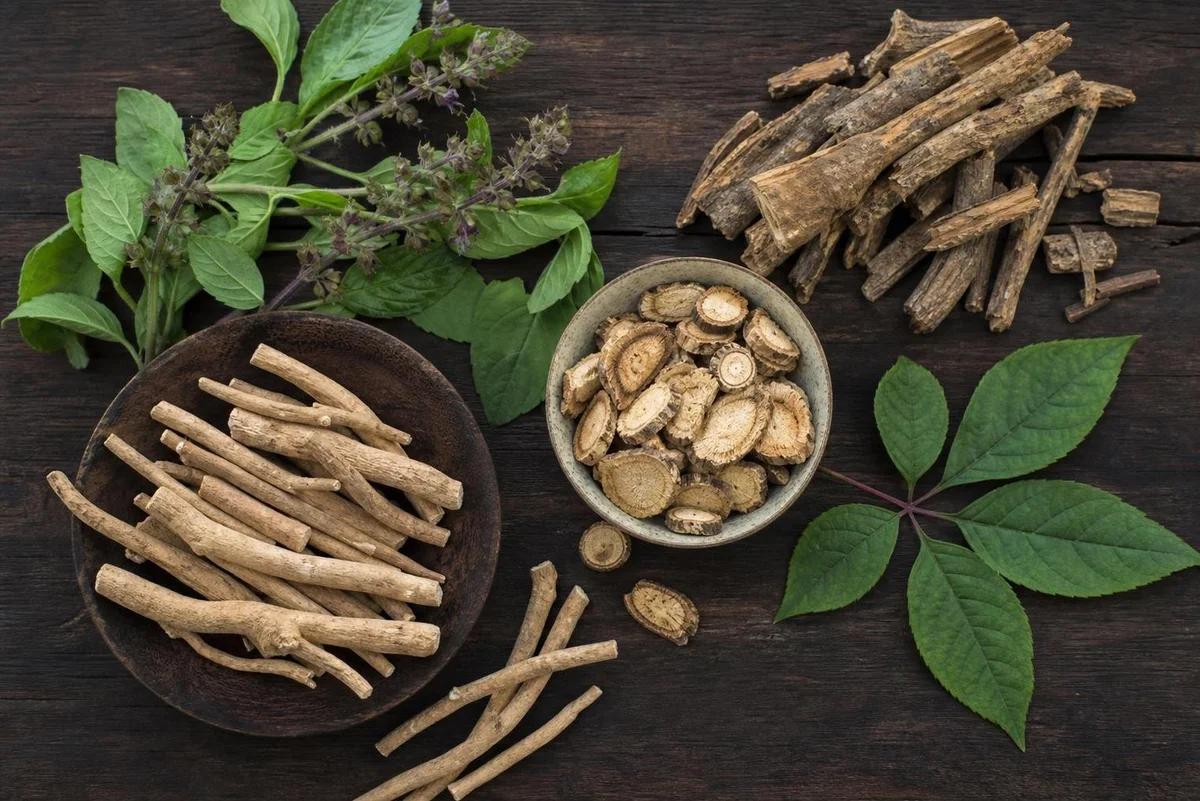
Evidence at a glance
| Plant | Human outcome studied | Evidence shape | Main uncertainty |
|---|---|---|---|
| Ashwagandha | Perceived stress, anxiety scales, some sleep/cortisol measures | Several small randomized trials | Extract differences, short duration, industry involvement in parts of the literature |
| Rhodiola | Stress-related fatigue, exhaustion, concentration | Small trials plus systematic reviews | Heterogeneous extracts and outcome measures |
| Holy basil | Stress and mood-related outcomes in limited studies | Thin human evidence | Too little replicated research for a confident rank |
| Eleuthero | Fatigue/endurance-related outcomes | Limited and mixed | Older studies and variable preparations |
| Schisandra | Fatigue/cognitive and liver-related research | Preliminary for this use | Insufficient replicated clinical evidence for stress claims |
Important Boundary
“Wired but tired” is not a cortisol diagnosis
Popular adaptogen charts often divide people into “high-cortisol wired” and “low-cortisol burned out” patterns, then route each pattern to a different herb. Symptoms such as fatigue, insomnia, low motivation, tension, or racing thoughts are real, but they are not specific enough to diagnose cortisol status. Sleep loss, depression, anxiety disorders, anemia, thyroid disease, medication effects, overtraining, infection, and many other conditions can overlap with the same descriptions.
Cortisol findings inside an ashwagandha trial can help explain that study. They do not validate a consumer self-test in which a feeling determines an endocrine state and an herb. This page therefore compares evidence by studied outcome instead of assigning a supplement from a symptom pattern.
Ashwagandha: stress signal with real caveats
Trials such as Lopresti 2019 and Chandrasekhar 2012 reported improvements in stress or anxiety scales and changes in cortisol-related measures. That gives ashwagandha a more developed human stress literature than many herbs sold as adaptogens.
The limitations matter: studies are generally small and short, extracts are not interchangeable, and a percentage change from one trial should not be presented as a guaranteed effect. Thyroid effects, pregnancy, sedation, medication use, and rare liver-injury reports also make a universal “first choice” label inappropriate.
Ashwagandha evidence profileRhodiola: fatigue signal, not a stimulant prescription
Rhodiola research is more concentrated on fatigue, exhaustion, and performance under stress. Olsson 2009 and the Ishaque 2012 systematic review are part of that evidence base. Some trials report improvement, but reviews also emphasize methodological limitations and heterogeneity.
That supports describing rhodiola as a candidate studied for stress-related fatigue—not telling someone who feels depleted that rhodiola is their match, nor assuming an “activating” reputation predicts every person's response.
Rhodiola evidence profileHoly basil, eleuthero, and schisandra
These plants are often given tidy roles in adaptogen charts—“general stress,” “endurance,” “liver stress,” or “focus.” The evidence is not tidy enough for those labels to function as prescriptions. Each has traditional use and some experimental or human research, but the quantity and replication are substantially thinner for the stress outcomes discussed here.
Thin evidence does not mean an herb is ineffective. It means uncertainty should stay visible. A comparison page should not turn the absence of strong data into a confident niche merely because every ingredient needs a box in a selector.
What about combining adaptogens?
Combining a “calming” herb with an “energizing” herb sounds intuitive, but direct combination trials are sparse. A stack also makes it harder to identify which ingredient caused a benefit or side effect. More ingredients create more interaction and product-quality questions; they do not automatically create a more balanced HPA-axis effect.
For anyone using prescription medication, managing a diagnosed mental-health or endocrine condition, pregnant or breastfeeding, or experiencing persistent fatigue or sleep disruption, the underlying clinical context matters more than an adaptogen-category label.
Bottom line
Ashwagandha currently has the deepest human stress literature of the herbs compared here, and rhodiola has a meaningful but less consistent fatigue-focused literature. That is an evidence ranking—not a recommendation that either herb is appropriate for a particular person. Holy basil, eleuthero, and schisandra remain more uncertain for these outcomes. The biggest upgrade in how to think about adaptogens is to stop matching herbs to self-diagnosed cortisol “types” and start asking what population, extract, outcome, duration, and safety context each study actually tested.
Source ledger
References
6 sources
- 01Panossian A, Wikman G. (2010). Effects of adaptogens on the central nervous system. Pharmaceuticals, 3(1): 188-224. PubMed →
- 02Lopresti AL, et al. (2019). Ashwagandha for stress and anxiety: a randomized controlled trial. Medicine, 98(37): e17186. PubMed →
- 03Sarris J, et al. (2013). Kava for generalized anxiety disorder. J Clin Psychopharmacol, 33(5): 643-648. PubMed →
- 04Ishaque S, et al. (2012). Rhodiola rosea for physical and mental fatigue: systematic review. BMC Complement Altern Med, 12: 70. PubMed →
- 05Chandrasekhar K, et al. (2012). Ashwagandha root extract in reducing stress and anxiety. Indian J Psychol Med, 34(3): 255-262. PubMed →
- 06Olsson EM, et al. (2009). Rhodiola rosea for stress-related fatigue. Planta Med, 75(2): 105-112. PubMed →
Free safety checklist
Get evidence reviews like this
Adaptogens, safety, and evidence—without turning a mechanism into a prescription.
We use your email to send the checklist and occasional evidence-first supplement updates. Unsubscribe anytime. Privacy policy.